The most common mistake with a salon client record is treating it as a contact list: name, phone number, done. Then a regular sits down and says, “Same as last time,” and last time was eleven weeks ago, mixed by a stylist who has since left, written in a notebook with coffee on the page.
A properly kept client card is the cheapest tool you have for keeping people coming back. Here’s what belongs on it, and how to make it earn its place.
The basics every salon client record needs
- Full name, and the name they like to be called
- Phone number and how they prefer to be contacted
- How they found you
- Birthday, if they’re happy to share it
- Date of their first visit
That’s enough. A card that asks for twenty things at the front desk won’t get filled in.
Put allergies and sensitivities at the top
Anything a client tells you about allergies, skin sensitivity or reactions to past products goes at the top of the card, where nobody can miss it. Not in a notes field at the bottom.
Ask at every visit, not only the first: “Has anything changed since last time? New medication, new skincare, anything that’s reacted?” Write down what they say, with the date.
Your card is a record, not a medical assessment. If a client describes a reaction you’re unsure about, it’s right to pause and suggest they check with their doctor before you go ahead.
Record patch tests and consent properly
For any service where a skin test is expected, such as hair color, lash extensions, lifts and tints, write down:
- The date of the test
- The exact product tested
- The result, and who carried out the test
- When the client gave consent, and how
Follow the instructions for the product you use on how far ahead of the service the test should be done and how often to repeat it. Your insurer and the rules where you work may set their own requirements, so check with them. Keep any signed consent form the way they ask. A note on a card doesn’t replace it.
A sensible habit: if you change product or brand, treat it as needing a new test.
How to write color formulas someone else could follow
A formula is only useful if another stylist, or you in four months, could mix it again from the note alone. “Warm brown” isn’t a formula. Something like this is:
Roots: 6N + 6G, 1:1, 20 vol, 35 min. Ends: gloss 8.1, 10 vol, 15 min. Result: a touch warm at the crown, go slightly cooler next time.
Include the brand, shades, ratio, developer, timing, where it went on, the result and what you’d change. That last line is where the real value is.
In a salon with a team, formulas have to live where every stylist can find them, not in one person’s notebook. A shared client profile in a salon management system with formula notes and allergy warnings does that job.
Nail and lash details
Nail and lash clients tend to repeat the same set, which makes their cards especially useful.
For nails, note shape, length, product and colors, plus anything about the natural nail: lifting on one finger, thin nail plates, a habit of picking.
For lashes, keep a lash map. Split the eye into zones from the inner to the outer corner and record length, curl and diameter for each. A note like “cat eye, C curl, 0.07, 8mm inner to 12mm outer” means the next fill starts in the right place instead of from scratch. Track retention too. If fills always look sparse at two weeks, that tells you something worth asking about.
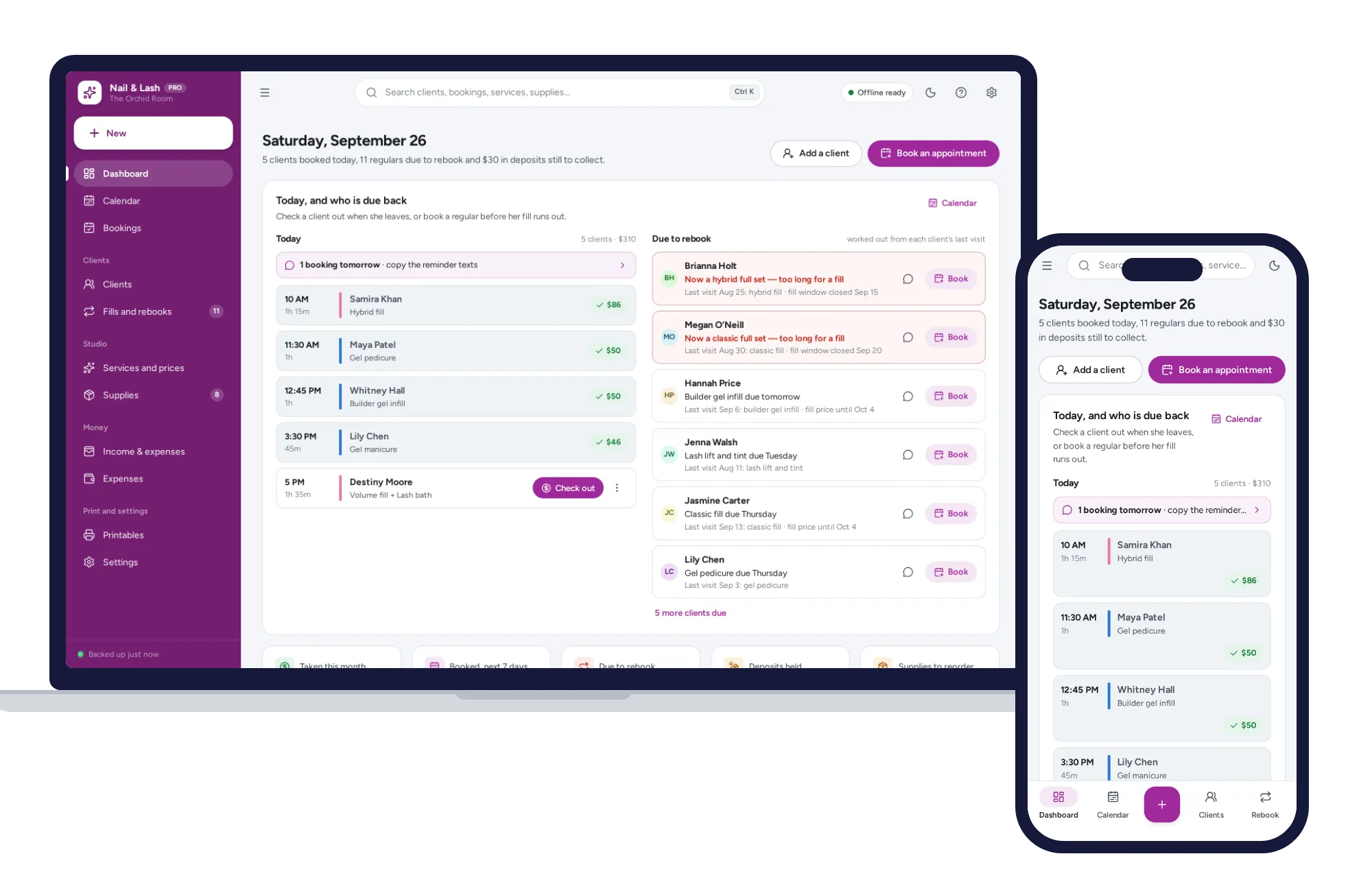
Drawing that map on paper every visit gets old fast. A nail and lash tech planner can store a six-zone lash map on the client and carry it to her next fill booking.
Preferences people notice you remembered
This is the part of the card that turns a good appointment into a place someone recommends:
- Chatty or quiet
- Coffee, tea or water, and how they take it
- Water temperature and massage pressure at the basin
- Time limits (“has to leave by 12:30 for school pickup”)
- Things they didn’t like (“no blow-dry, air-dries at home”)
- Photos of the finished look, taken with their permission
Keep it professional. Write what helps the service, not opinions about the person, and assume they might one day ask to see what you’ve written.
How to use client records to get more rebookings
The best time to book the next appointment is while the client is still in the chair. Give each service a rough rebook interval, then use it.
Say root color usually holds about six weeks, a gel manicure about three, and a lash fill two to three. When a client finishes, the card already suggests the next date. If they don’t book on the spot, the card tells you who’s overdue, and a short weekly list of clients who are due but not booked is often worth more than an ad.
Note deposits and no-shows on the card as well. If someone has missed two appointments, you want to know that before you hold a Saturday slot for them.
A five-minute routine for every visit
- Before: read the card. Allergies, last formula or map, preferences.
- At the chair: ask what’s changed since last time.
- During: jot down anything you adjust.
- After: update the formula or map, add a photo if they agreed, and note what you’d change.
- At checkout: book the next visit, or record when they’re due.
Keeping it all in one place
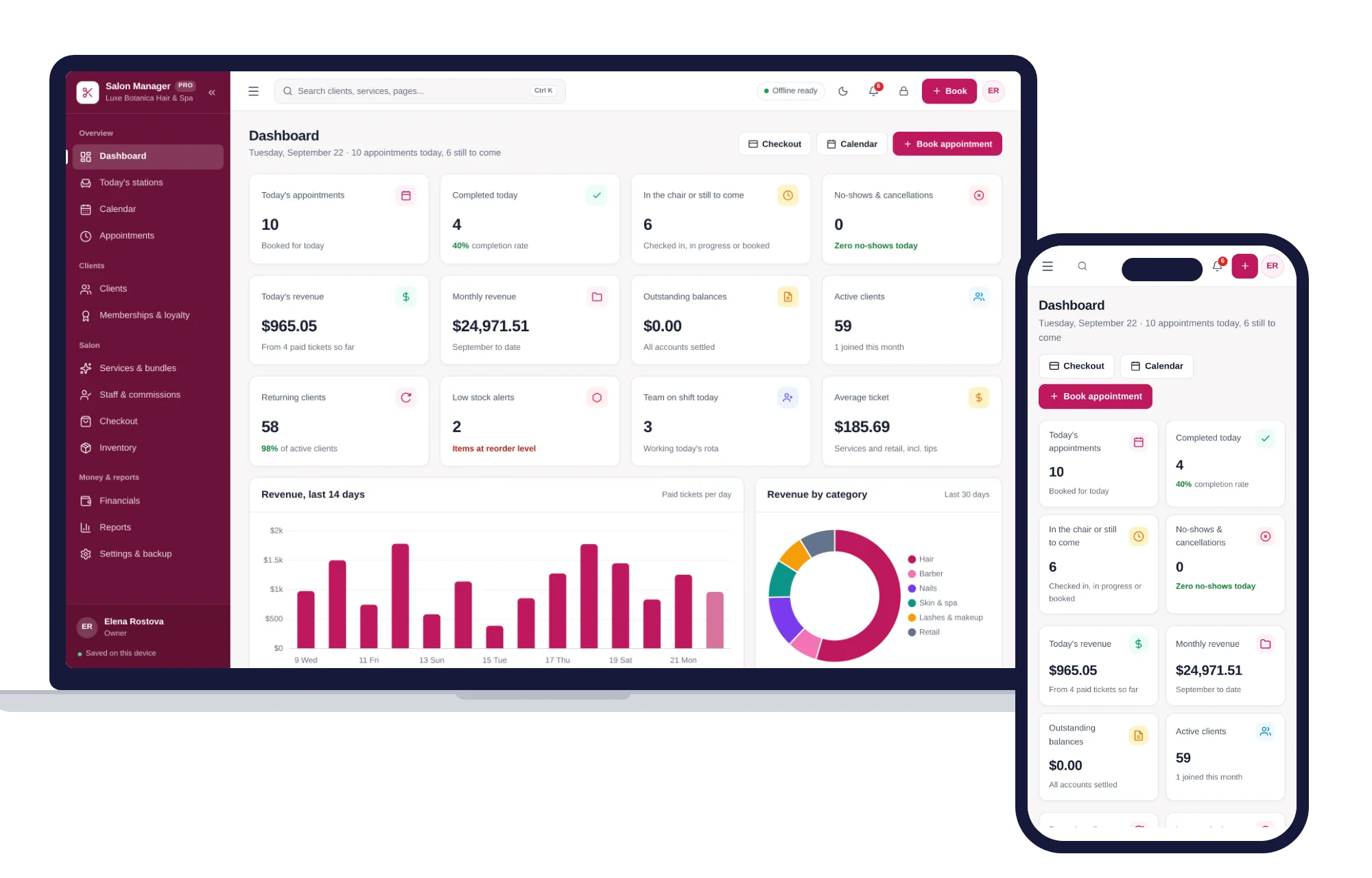
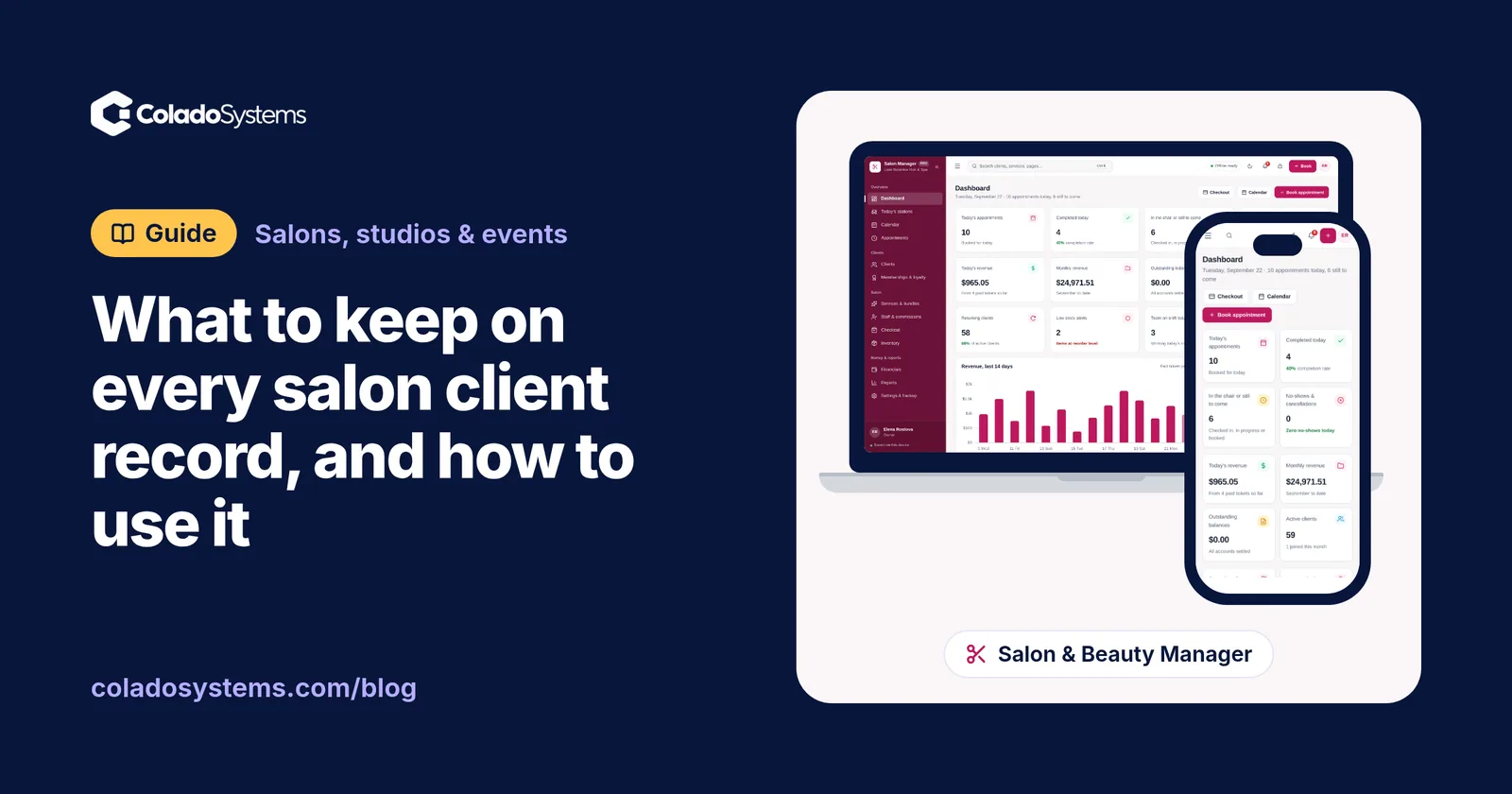
Paper cards in a box work fine, until you have three stylists and a few hundred clients. The Salon & Beauty Management System keeps a profile for every client with visits, spend and loyalty points, formula notes and allergy warnings, and lets you book again straight from the profile. It also runs appointments, stations, staff commissions, checkout and retail and back-bar stock for a salon with a team. Everything is saved in the browser on your own device and isn’t sent anywhere, and you can set a PIN so a lock screen covers the app when you step away. If you sell retail, a simple stock count routine for a small shop keeps those shelves honest too.
If you work on your own, the Nail & Lash Tech Planner is built around exactly the record described above. Allergies show in red on every booking. Each client has a patch-test date and a consent note, and you’re warned when a test is missing, old or too recent by your own rule. Nail sets keep shape, length, product and colors. Fill reminders are worked out from each client’s last visit and service, with a ready-written rebook text to copy, and income and expenses export for tax time. You can print a client card with allergies, patch test and lash map on it. Solo techs may also like a simple monthly habit for setting aside tax when self-employed.
Both sit on the shelf with more systems for salons, studios and events. Neither one replaces a signed consent form or a doctor’s advice. What they do is make sure the information is in front of you every time a client sits down, so “same as last time” is an easy request again.
Skip the setup
The Salon & Beauty Manager has the records this guide describes already set up. Appointments, stations, clients, memberships, staff commissions and checkout — one offline app.
$29.99 one-time
- Sample data to try it the same day
- Works offline, records stay on your device
- A PDF guide in the download
See everything inside the Salon & Beauty Manager. Or take the whole Salons, studios & events shelf: 6 systems for $99.99, $79 less than one by one.
Common questions
What information should be on a salon client record card?
Keep contact details, allergies and sensitivities, patch test dates and results, consent notes, color formulas or nail and lash details, preferences, photos taken with permission and a rebook date. Put allergies at the very top where nobody can miss them, and update the card at every visit rather than only when the client is new.
How do you write down a hair color formula?
Record the brand, each shade, the mixing ratio, developer strength, processing time and where it was applied, such as roots, mids or ends. Add the result and what you would adjust next time. A good test is whether another stylist could mix and apply the same color from your note alone, without asking you anything.
How long should a salon keep client records?
It depends on where you work, your insurer and the services you offer, especially for consent and patch test records. Ask your insurer or a local professional body what they expect, and check any privacy rules that apply to personal information in your area. Whatever the period, store records where only you and your team can see them.
How do I get more salon clients to rebook?
Ask while they are still in the chair, using a rebook interval for each service so you can suggest a specific date. If they will not commit, note when they are due and keep a weekly list of clients who are due but not booked, then send a short personal message. Remembering their preferences gives them a reason to return.