Plenty of real estate leads aren’t lost to a better agent. They’re lost to silence. Someone asks about a listing on a Tuesday, you call back once, they don’t pick up, and by the following week they’re touring homes with whoever called them twice.
The fix isn’t working harder. It’s a real estate lead follow-up system: one place where every inquiry lands, a rule for when each lead hears from you next, and a short daily routine that makes sure it happens. Here’s how to build one that works in a notebook, a spreadsheet or a CRM.
Why leads go cold
Leads rarely say no. They drift, and the usual reasons are on the agent’s side:
- Slow first response. The person who asked is thinking about that home today. Next week they may not be.
- No next step booked. A call that ends without a date for the next one usually means there won’t be one.
- No notes. If you can’t remember their price range or the school they asked about, the next call sounds like a cold call.
- Every lead treated the same. Someone moving in two months and someone looking ahead to next year need very different attention.
Step 1: Capture every inquiry in one place
Leads come from everywhere: portal inquiries, sign calls, open house sign-in sheets, referrals, social media messages, a chat at the school gate. Put every one in the same list the same day.
For each lead, record:
- Name, phone and email
- Where they came from
- What they want: buy or sell, area, price range, must-haves
- Their timeline
- The date of your last contact and what was said
- The date of your next contact and what you’ll raise
The source matters more than it looks. After a year, it tells you which sources turn into closings, so you know where to spend your money and time.
Step 2: Sort leads by timeline
Group your leads by when they plan to move, not by how promising they feel:
- Hot: moving in the next three months. Contact every two or three days.
- Warm: three to twelve months out. Every two weeks.
- Long-term: a year or more, or unsure. Monthly.
Then track where each one stands. A simple set of stages works: new, contacted, showing, under contract, closed or lost. That can be a column in a spreadsheet or a lead pipeline in a real estate agent CRM where you drag each card from new to closed. Writing down what each lead could be worth, even roughly, shows you whether your pipeline can carry the year.
A real estate lead follow-up schedule for the first 30 days
The first month after an inquiry matters most. A schedule like this keeps you in touch without becoming a pest:
- Day 0: respond as fast as you can. Call, and if there’s no answer, leave a short voicemail and send a text or email saying who you are and why you’re reaching out.
- Day 1: follow up on whatever they asked about, such as listing details, a showing time or similar homes.
- Day 3: send a few listings that match what they told you, or a short note on the area.
- Day 7: call. Ask one question that moves things along, such as their timeline or whether they’ve spoken to a lender.
- Day 14: share something useful, like recent sales nearby or an answer to a question they raised.
- Day 30: check in, then move them to the rhythm that matches their timeline.
One rule makes the whole schedule work: never end a contact without booking the next one.
How many times should you follow up with a real estate lead?
Until they buy, sell, or ask you to stop. What changes over time is the spacing, not whether you keep going. A long-term lead who hears something useful from you once a month for a year has a reason to think of you when they’re ready. One who heard from you twice in the first week and never again doesn’t.
Respect opt-outs straight away. Rules about calls, texts and marketing messages vary by place, and your brokerage may have its own policies, so check both before you set up any regular messages.
What to say when you follow up
Keep each message short and specific to the person. A few starting points:
- “Hi Dana, it’s Sam from the open house on Elm Street. You mentioned wanting a bigger yard, and two homes came up this week that might fit. Want me to send them over?”
- “Hi Mark, just checking in. Are you still thinking about spring, or has the timeline moved?”
- “Hi Priya, a home two streets from yours sold last week. I’m happy to send you what it might mean for your place.”
A week of follow-ups, worked through
Say you have 40 active leads: 6 hot, 14 warm and 20 long-term.
- Hot leads every two or three days: about 15 contacts a week
- Warm leads every two weeks: about 7 a week
- Long-term leads monthly: about 5 a week
That’s roughly 27 contacts a week, or five or six each weekday. At four or five minutes each, the routine takes about 25 minutes a day. The hard part isn’t the time. It’s knowing every morning exactly who those five or six people are, and what you promised each of them last time.
Past clients and closing anniversaries
Closed clients are often the best source of the next lead. Put them on a slower rhythm: a note on their closing anniversary, a seasonal check-in, an offer to tell them what their home might be worth. Keep them in the same list, so they never drop out of sight. When a new lead does become a client, this client onboarding checklist for small service businesses helps you set expectations from the first meeting.
Phone notes, spreadsheet or CRM?
- Phone contacts and notes are always with you and free, but there are no reminders, no pipeline and no way to see who’s overdue.
- A spreadsheet is free and flexible. You have to sort it every morning and build any overdue flags yourself, and it’s easy to stop updating.
- Your brokerage’s CRM is often included, but check what happens to your contacts if you change brokerages.
- A subscription CRM often connects to email, portals and automatic text campaigns. At, say, $40 a month, that’s $480 a year, every year.
- An offline CRM you buy once has a one-time price, and the database stays yours whichever brokerage you’re with. It connects to nothing, though: no MLS feed, no email sync, no automatic texts. Each device keeps its own copy, and you keep your own backups.
Keeping it all in one place
To run this system from a spreadsheet, you’d need columns for source, timeline, stage, last contact and next contact, a formula to flag overdue rows, a filter for today’s calls, a separate list of closing anniversaries, and the discipline to update it after every call. Miss a few days and the lead who asked about the house on Elm Street is quietly working with someone else.
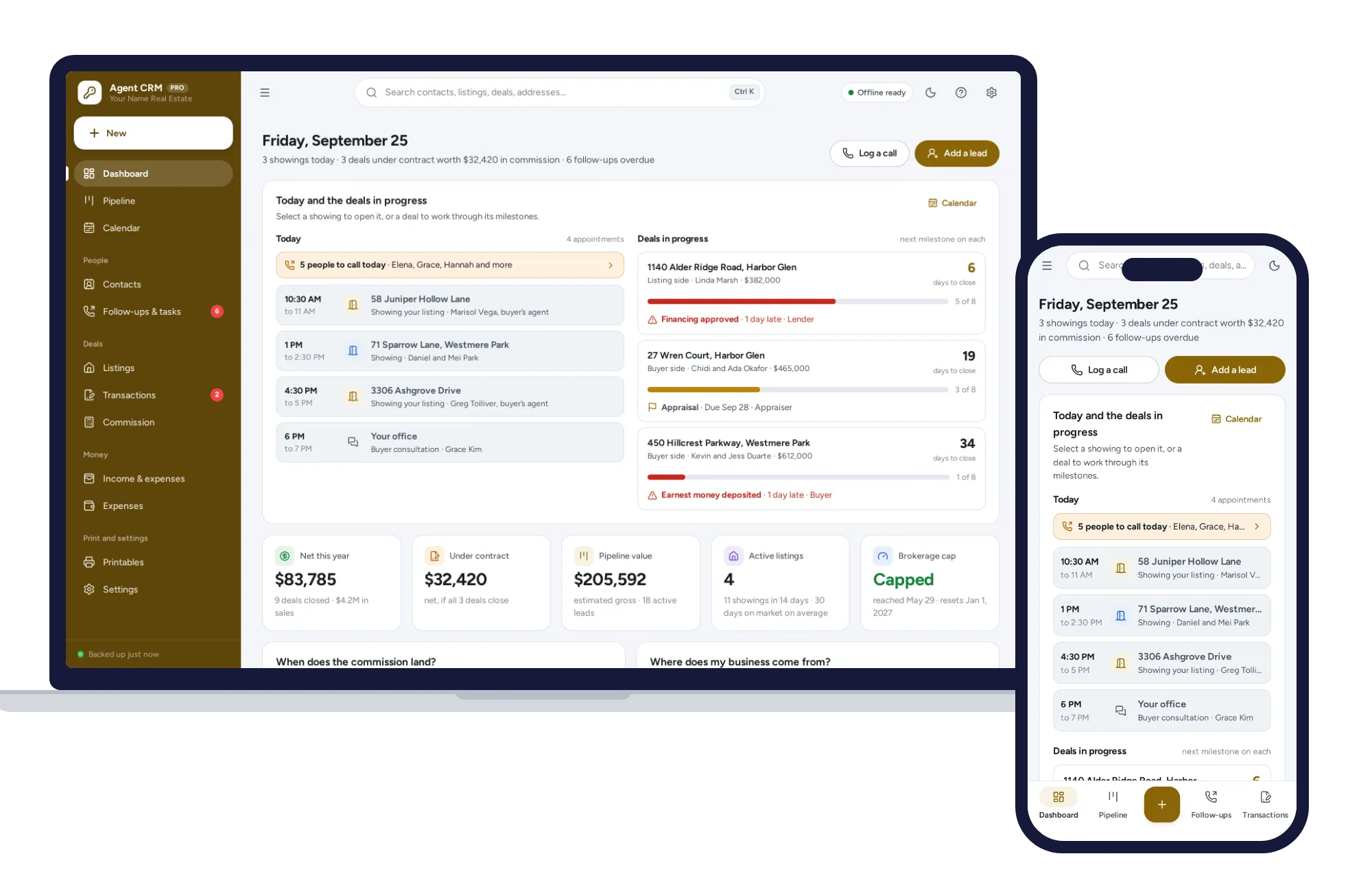
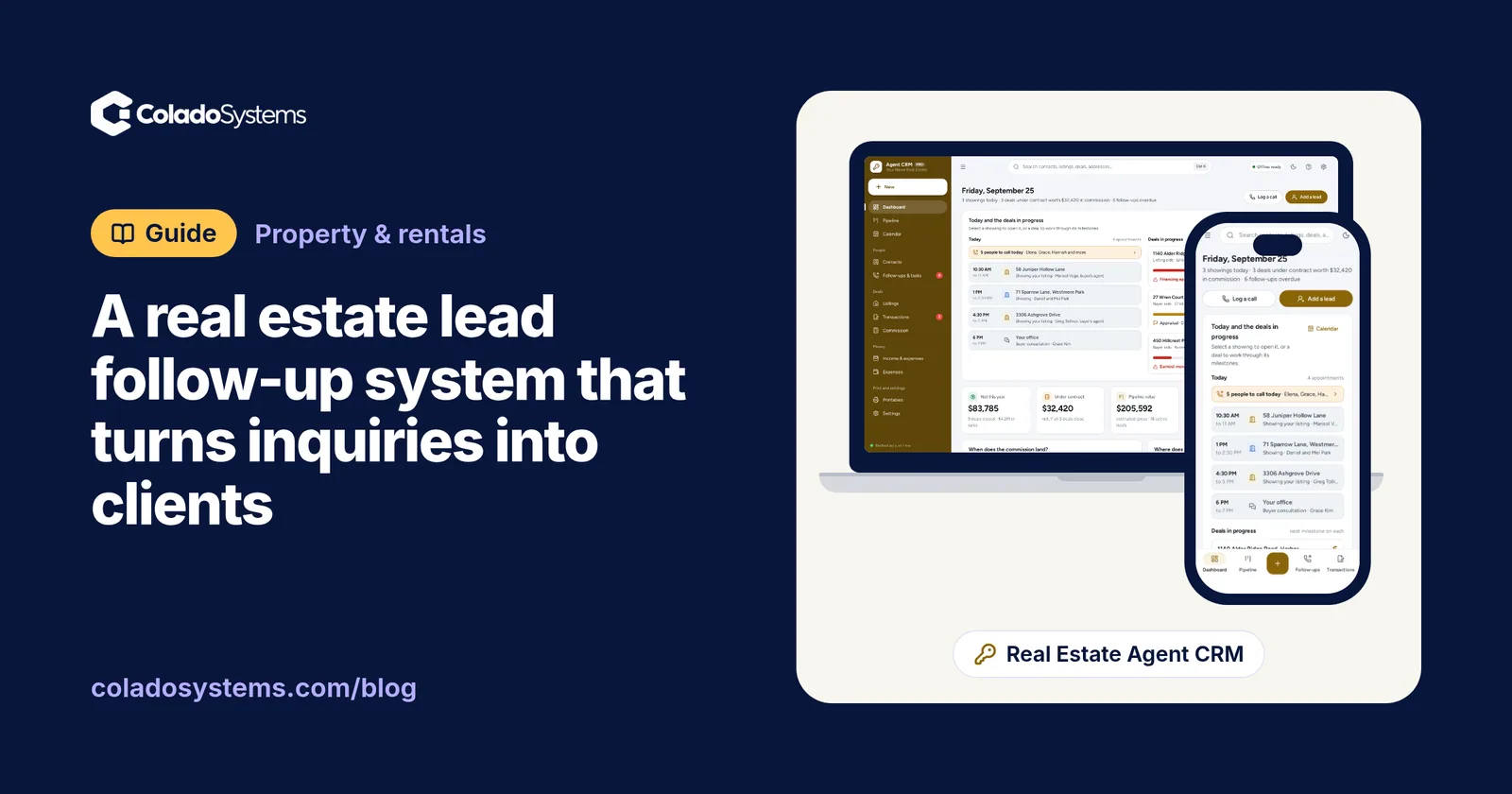
The Real Estate Agent CRM is built around that routine. Its follow-ups screen lists who is overdue, due today and due later this week, with what to raise, and you can log a call, text or email and book the next one in one step. Closing anniversaries show up too, so past clients keep hearing from you. The lead pipeline runs from new to closed or lost, shows what each lead could be worth and every stage in total, and records how each client found you, so you can see which sources pay. When a lead goes under contract, transactions track each milestone through to closing, and the commission screen works out your take-home after splits and fees. You can import contacts from a CSV file and export them to Excel or CSV at any time.
It opens with sample data so you can try the follow-up routine straight away. There’s no account and no subscription, it works offline, records stay on your own device, and a PDF guide is included. You’ll find other systems for property and rentals on the same shelf.
To get started, see everything inside the Real Estate Agent CRM and walk through tomorrow morning’s follow-ups with the sample data first.
Skip the setup
The Real Estate Agent CRM has the records this guide describes already set up. Your database is yours, not your brokerage’s — leads, listings, deals and commission, offline on your own device.
$29.99 one-time
- Sample data to try it the same day
- Works offline, records stay on your device
- A PDF guide in the download
See everything inside the Real Estate Agent CRM. Or take the whole Property & rentals shelf: 6 systems for $99.99, $79 less than one by one.
Common questions
How soon should you follow up with a real estate lead?
As soon as you reasonably can, ideally the same day the inquiry comes in, while the person is still thinking about the home or question that prompted it. If they do not answer, leave a short voicemail and send a text or email so they know who you are, then try again the next day with something specific to what they asked about.
How often should I contact real estate leads?
Match the rhythm to their timeline. Buyers or sellers planning to move within about three months can hear from you every few days, those three to twelve months out every couple of weeks, and longer-term leads around once a month. Make each contact useful, keep notes on what was said, and always set the date for the next one.
What is the best way to organize real estate leads?
Keep every lead in one list with their source, what they want, their timeline, the last time you spoke and the next date you plan to reach out. Group them by stage, such as new, contacted, showing, under contract and closed, and review the list every morning so you know exactly who needs a call that day.
How do real estate agents stay in touch with past clients?
A simple approach is a slower, steady rhythm: a note on the anniversary of their closing, a seasonal check-in and an occasional update on what nearby homes have sold for. The aim is to stay useful and familiar, so that when they or a friend need an agent, yours is the name that comes to mind first.