Say you charge $40 an hour because it is a bit more than your old job paid. Then you do the year. Of a 40-hour week, perhaps 25 hours are billable. Take off vacation, holidays and sick days, and you bill about 1,150 hours, or $46,000, before any business costs or tax. Your old employer also paid for the laptop, the software and the time off.
That gap is why learning how to price your services from the ground up matters more than picking a number that feels fair. The method takes four steps: costs, time, target income and a market check. It works for any service, from bookkeeping to dog walking to photography.
Tax rules depend on where you live and on your own situation, so treat this as general guidance and check the tax side with an accountant.
Step 1: Add up what the business costs to run
List every cost of being in business for a year. Use last year’s real totals if you have them. Here is a made-up example:
- Software and subscriptions: $1,200
- Equipment, spread over its useful life: $1,800
- Insurance: $900
- Business share of phone and internet: $600
- Travel and mileage: $1,500
- Website and marketing: $1,000
- Payment processing fees: $800
- Accountant and training: $1,200
That comes to $9,000 a year. Do not leave out the small things; a few $15 subscriptions add up fast.
If you already sort expenses by category, your starting list is ready. A self-employed bookkeeping planner with expenses by category and a profit and loss report gives you those totals by month, quarter or year.
Step 2: Count your real billable hours
Billable hours are the hours a client pays for. Everything else still takes time: quoting, email, invoicing, travel, marketing and bookkeeping.
Start with 52 weeks. Take off four for vacation and public holidays and two for sickness and slow patches. That leaves 46 working weeks. If 25 hours a week are billable, you have 1,150 billable hours a year.
Not sure of your own split? Track every hour for two normal weeks and mark each one billable or not. The billable share is often lower than people expect.
Step 3: Set your target income
Decide what you want to pay yourself for the year before income tax. Include what an employer used to cover, such as retirement saving and, if you pay for it yourself, health insurance. For the example, say $60,000.
Your prices have to cover tax on that income, because nobody withholds it for you. Some services also need sales tax or a similar tax added on top. Ask an accountant what to set aside and what applies to your work.
How to price your services: a worked example
Now put the numbers together.
- Add target income and costs: $60,000 + $9,000 = $69,000.
- Divide by billable hours: $69,000 / 1,150 = $60 an hour. This is your floor, the least you can charge and still hit your target.
- Add a margin for slow months and reinvestment: 15% brings it to $69. Round to $70.
Compare that with the $40 you started with. The $30 difference, across 1,150 hours, is $34,500 a year.
Most clients do not buy hours, though. They buy a result. So turn the rate into a price. Here is a family portrait session:
- Booking emails and planning call: 0.5 hours
- Travel there and back: 1 hour
- The shoot: 1 hour
- Culling and editing: 3 hours
- Gallery delivery and follow-up: 0.5 hours
That is 6 hours at $70, or $420, plus $25 in mileage and direct costs, for $445. You might round to $450. Photographers usually sell this as a package, and a photography studio manager that keeps packages, retainers and invoices together saves rebuilding the sum every time you quote.
How do you know if your prices are too low?
Your floor tells you what you need. The market tells you what clients expect. Check both.
Look up five to ten people offering similar work in your area or niche, and note the low, typical and high prices. Then see where your floor sits.
- Your floor is below the typical price. You can almost certainly charge more. Being the cheapest tends to attract the clients who haggle hardest.
- Your floor is above the typical price. Do not just cut it. Look at specializing, building packages that include more, trimming costs, or finding more billable hours.
Watch your own signals too. If you book nearly every inquiry, nobody ever hesitates at the price, or you are fully booked and still short of money, your prices are probably too low. If inquiries go quiet the moment you send prices, you may be too high, or not explaining what the price includes. Keeping a simple count of inquiries against bookings makes this visible.
Hourly, project or package?
- Hourly is fair when the scope is unclear, but it penalizes you for getting faster.
- Project prices reward speed. Write down exactly what is included, and price extras separately.
- Packages are easiest for clients to choose and suit repeatable work. Build each one from your rate, as above.
- Retainers trade a set monthly fee for agreed hours or deliverables, which smooths out income.
Whichever you use, keep your rates in one place so every quote starts from the same numbers. A small business management system that stores each service with its rate and turns quotes into invoices does that.
Review prices once a year, when you update your costs. Raise them for new clients first, and give existing clients a few weeks’ notice with a short, plain explanation.
What it takes to keep the numbers current
You can run all of this in a spreadsheet: an expense log by category, a time log, a rate calculator, a quote template and a list of inquiries with which ones booked. That is five things to build and keep in step.
Here is where those steps already live in our systems.
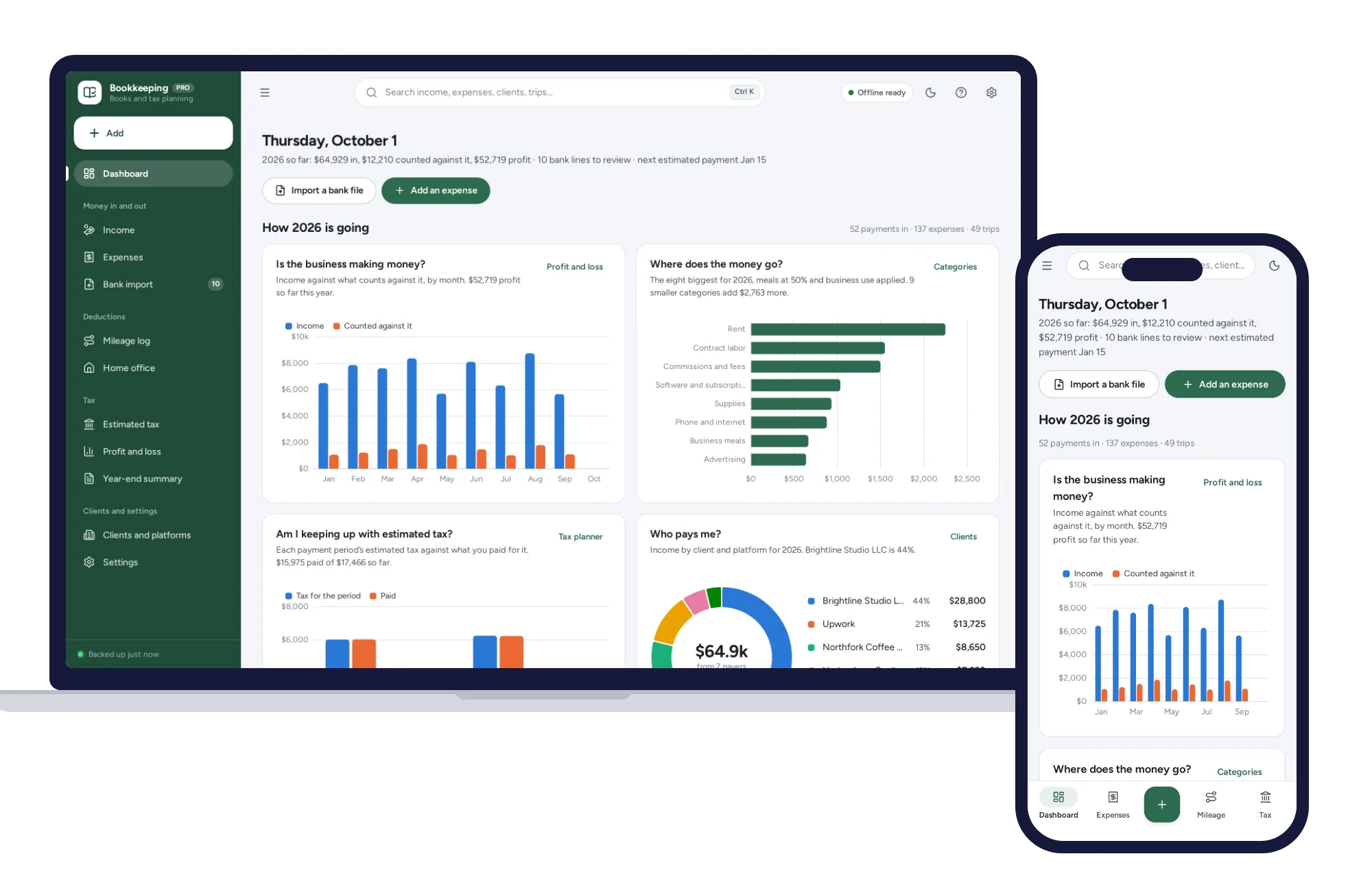
The Self-Employed Bookkeeping & Tax Planner, made for US freelancers, covers step 1. It imports your bank and card CSV files and sorts them by your own rules into Schedule C categories, with receipt photos, a mileage log, and profit and loss by month, quarter or year. Its quarterly estimated tax planner shows the working, so you can see what to set aside. Those are estimates for planning; confirm them with a tax professional.
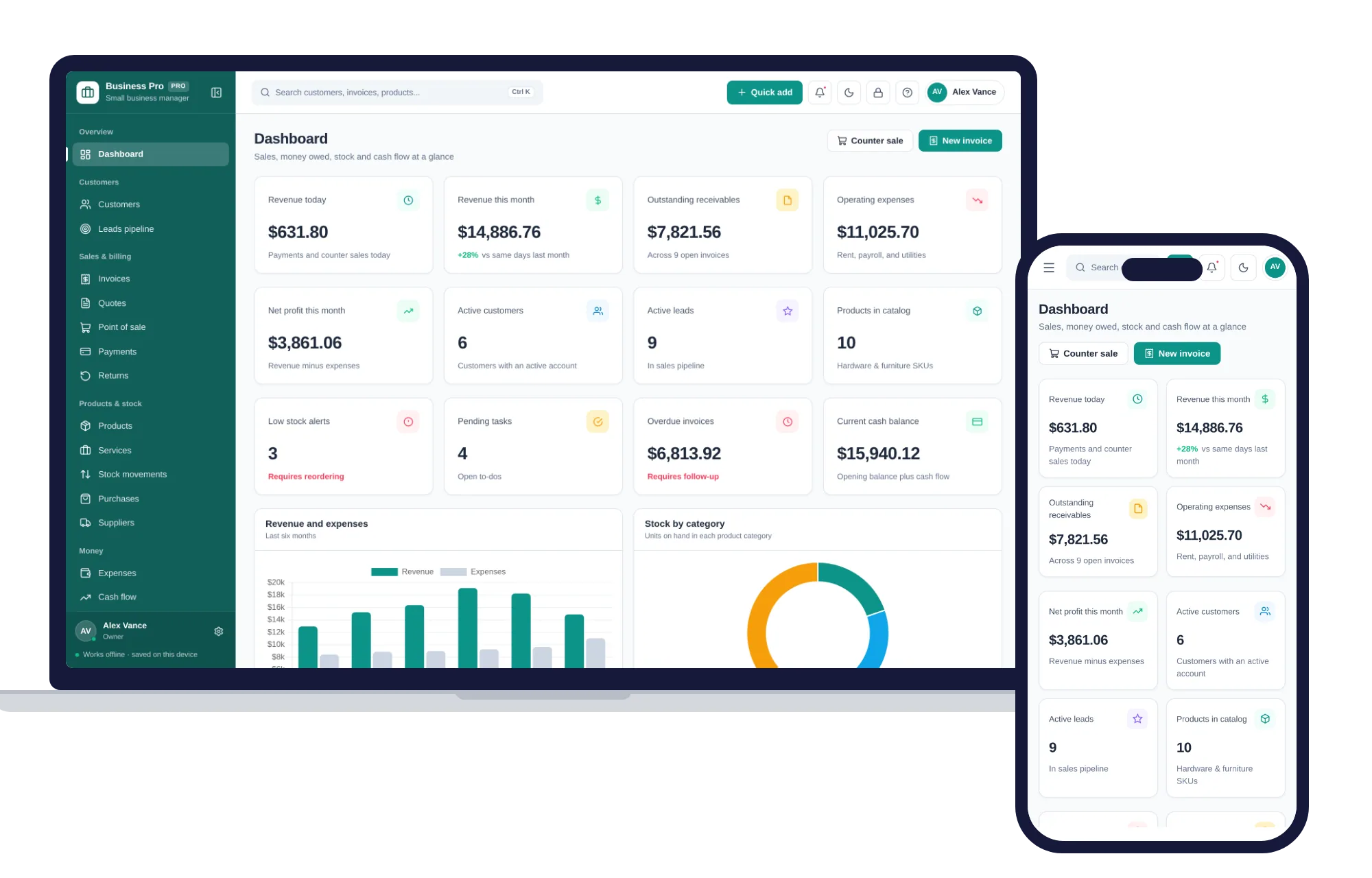
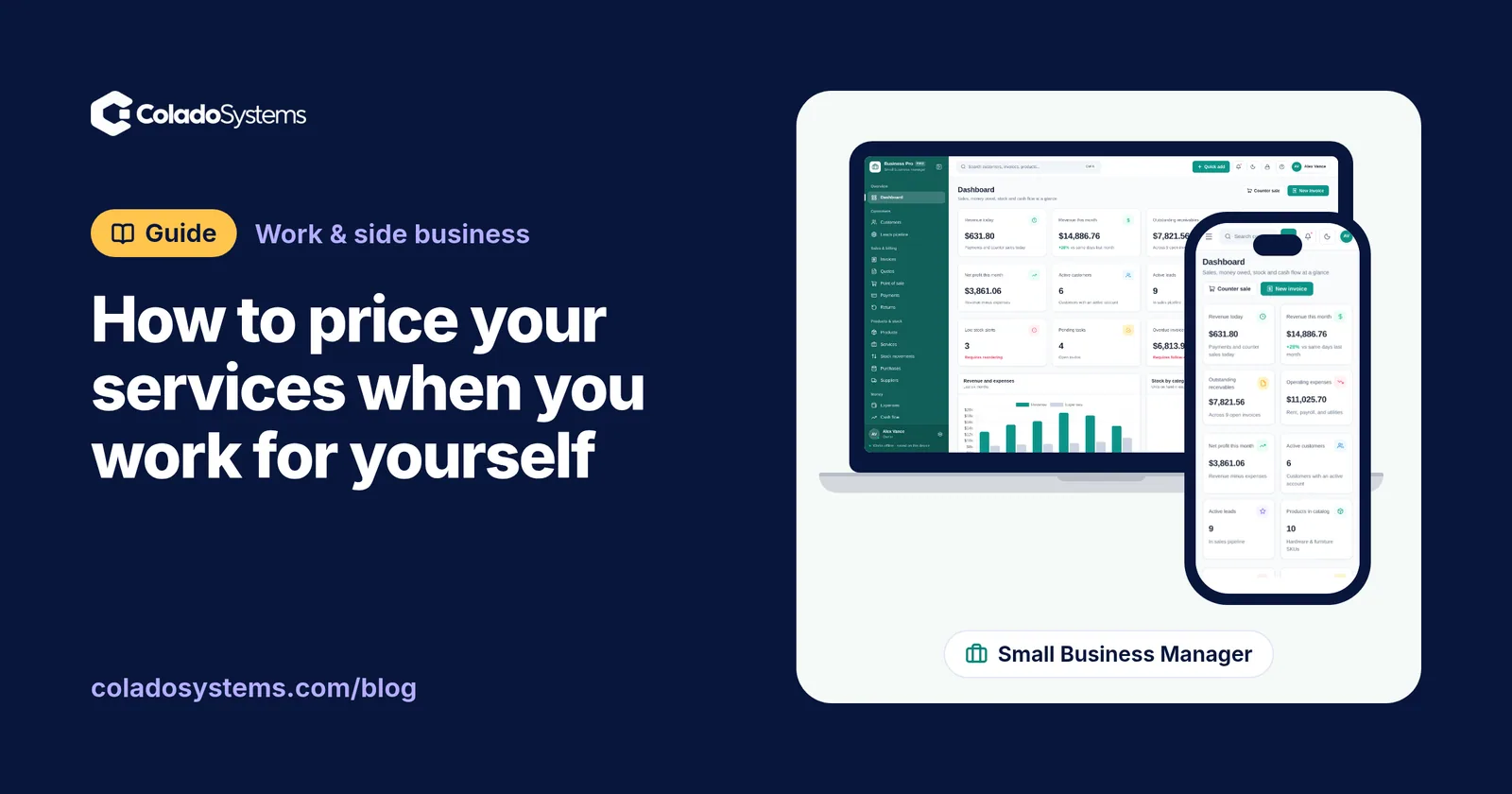
The Small Business Management System holds each service with a rate and a billing cadence, turns quotes into invoices, sorts expenses by category and shows your real profit on its Profit & loss page. The leads pipeline shows each deal’s value and win chance.
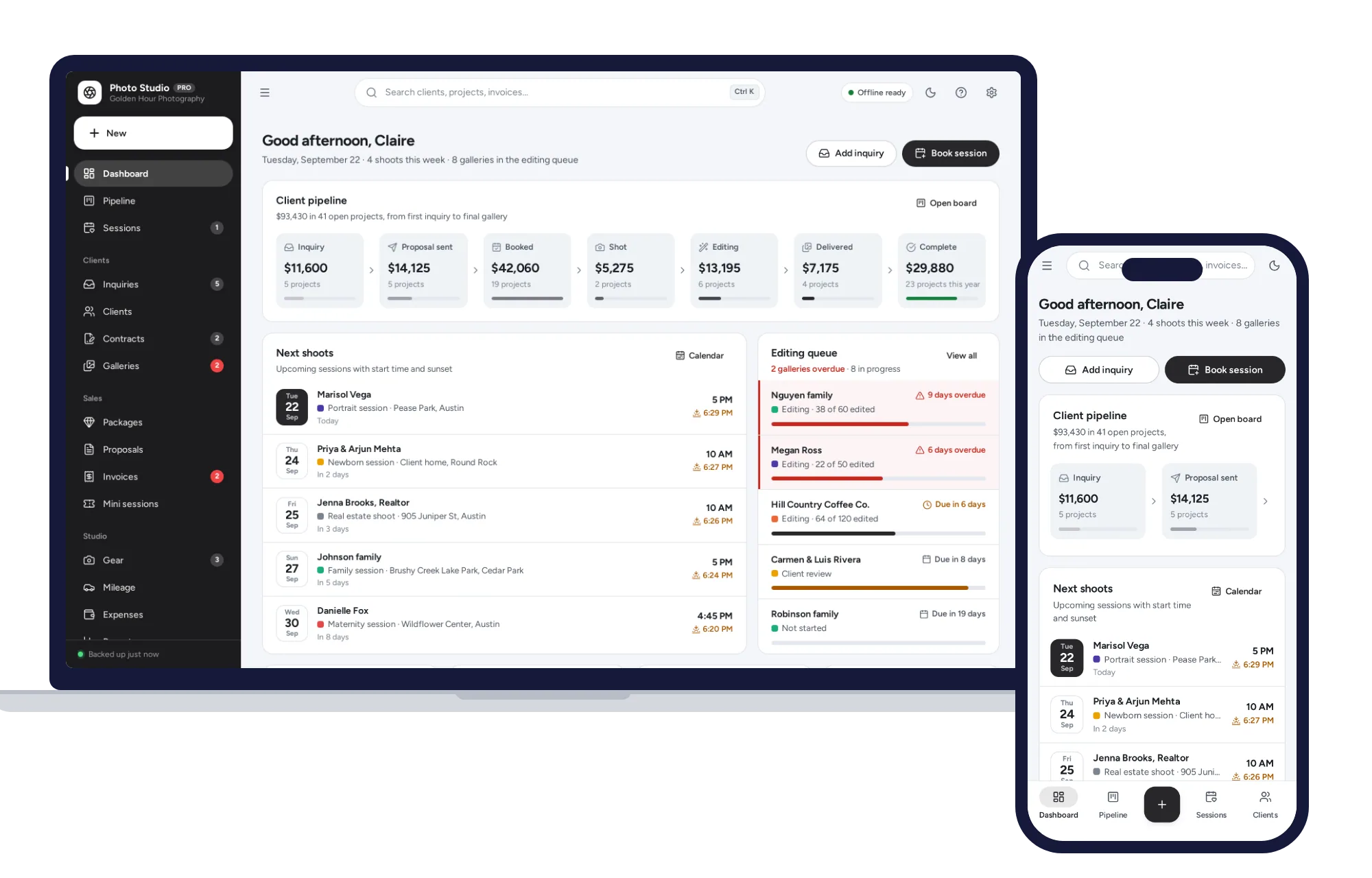
The Photography Studio Manager keeps package pricing and retainers, builds proposals and invoices as a retainer plus balance, and tracks your booking rate by inquiry source, which is the market check from above. Its gear inventory records insured value, and the mileage log keeps a year-to-date total.
Count your tools as costs, too. An invoicing app at, say, $20 a month is $240 a year that every job has to cover, every year. These are a one-time price.
Keeping it all in one place
Each system opens with sample data, so you can test your own rate against it the same day. There is no account or sign-up, it works offline, your records stay in the browser on your own device, and a PDF guide is included.
Once your price is set, put part of every payment aside for tax with a simple monthly habit for setting aside tax when self-employed. For the same method applied to a trade, see how to price HVAC jobs so every quote covers your costs, and browse other systems for work and side businesses.
If you freelance in the US, you can see everything inside the Self-Employed Bookkeeping & Tax Planner and try it with the sample books the same day.
Skip the setup
The Small Business Manager has the records this guide describes already set up. Customers, leads, invoices, point of sale, stock, expenses and profit & loss in one offline app.
$29.99 one-time
- Sample data to try it the same day
- Works offline, records stay on your device
- A PDF guide in the download
See everything inside the Small Business Manager. Or take the whole Shops, food & stock shelf: 7 systems for $114.99, $94 less than one by one.
Common questions
How do I calculate my hourly rate as a freelancer?
Add the pay you want for the year before tax to your yearly business costs, then divide by the hours you can realistically bill. Billable hours are usually far fewer than hours worked, once admin, quoting, travel, vacation and sick days come out. Add a margin for slow months, then compare the result with what others charge for similar work.
Should I charge hourly or by the project?
Hourly suits work where the scope is unclear or keeps changing, because you are paid for every hour. Project and package prices suit repeatable work, reward you for getting faster and are easier for clients to say yes to. Build either one from your hourly rate, and write down exactly what a project price includes so extras can be charged.
How do I know if I am charging too little?
Common signs are booking almost every inquiry, never hearing a client hesitate at the price, and being fully booked while still short of money at the end of the month. Work out your minimum rate from your costs, hours and target income. If your current price sits below that number, you are effectively paying to do the work.
Do I need to include tax in my prices?
Your price has to cover the income tax you will owe on your profit, because nobody takes it out for you. Some services may also need sales tax or a similar tax added on top, depending on where you work and what you sell. The rules vary a lot by location, so ask an accountant before you set your prices.