What do you actually need to write down? It is the question almost every new homeschooling parent asks, usually after a week of good intentions and a pile of loose worksheets on the counter.
The short answer: less than you fear, and more than nothing. Good homeschool record keeping comes down to a steady weekly note of four things (attendance, subjects, books and a few samples of work) covers most families well. It takes about fifteen minutes on a Friday once you have a routine.
Start with your own rules
Homeschooling rules differ a lot from place to place. Some states and countries ask for nothing at all. Others want a set number of school days or hours, a portfolio, test scores, an annual evaluation, or a notice filed each year. Some ask for different things depending on which legal option you homeschool under.
So before you build any system, look up the requirements for where you live. Your state or national education department is the official source, and a local homeschool group can usually explain in plain words what families there actually do. Write down what you found and the date you checked, because rules do change. Nothing here is legal advice. It is a sensible baseline you can adjust once you know your own requirements.
What homeschool records should you keep each week?
Attendance
Mark which days you did school. If your area counts hours instead of days, log hours. Note half days and sick days honestly rather than guessing later.
Here is why weekly beats yearly. Say the requirement you need to meet is 180 days, and you plan five school days a week. By the end of week 12 you would expect 60 days. If your record shows 57, you know in October that you are three days behind, while there is plenty of time to add a few Saturday field trips or shorten a break. Found out in May, the same gap feels like a crisis. A homeschool planner that counts attendance against your requirement does this sum for you every time a lesson is ticked off.
Subjects and what you covered
You do not need to record every worksheet. One line per subject per week is enough for most families:
- Math: lessons 34 to 38, adding fractions with unlike denominators
- Science: plant cells, made a model from clay
- History: the Lewis and Clark expedition, map work
- Writing: two paragraphs on a book, edited and rewritten
That small log shows what was taught and when. It also shows you, at a glance, which subject quietly slipped for three weeks in a row.
Books read
Keep a running list for each child: title, author, date finished, and whether it was a read-aloud or read alone. Add a word or two if they loved it or abandoned it. An older child who loves reading may enjoy keeping their own reading journal and book tracker, with reviews and favorite quotes.
A reading list is one of the most convincing records you can show anyone. It proves breadth without a single test. For high schoolers, it also supports the English and literature credits you will list on a transcript later.
Work samples
Pick one or two pieces per subject each month, date them and label them. Aim for a mix:
- An early attempt, from the start of a topic
- A typical piece, from an ordinary week
- A best piece, the one they are proud of
Put together over a year, that mix shows progress far better than a folder of only perfect pages. For projects that do not fit in a folder, such as a model, a garden or a science fair board, take a photo and note the date and subject.
Field trips and activities
Co-op classes, sports, music lessons, museum visits and volunteer work all count as learning, and in some places they count toward hours. Note the date, the activity and roughly how long it took.
Grades and credits for high school
If you have a teenager, start the transcript record now rather than reconstructing four years of courses at application time. For each course, keep the title, the materials used, the grade and the credits. A note on how you graded (tests, projects, papers) helps if anyone asks later.
Why bother, even if your rules ask for little
It is tempting to skip all this if nobody is going to check. A few reasons not to:
- You move. A new state or country may ask for records you never had to keep before.
- A child goes back to school. A school placing your child will often want to see what they have covered.
- College applications. A transcript built week by week is accurate and quick to print. One pieced together from memory is neither.
- You can see the trend. Is reading taking off while math stalls? A weekly record shows it before it becomes a problem.
- Bad weeks. Every homeschooling parent has the week where it feels like nothing got done. Flip back a month and the record shows otherwise.
A 15-minute weekly homeschool record keeping routine
- Mark the week’s attendance and count the running total against your requirement.
- Write one line per subject for each child.
- Add any finished books to each child’s reading list.
- Choose a work sample or two, date them and file or photograph them.
- Log field trips, co-op and activities.
- Glance at next week’s plan and move anything that did not get done.
Keep the samples for each school year together, in a binder or a dated folder on your computer. How long to keep older records depends on your situation, so check local guidance, but most families hold on to high school records for good. If your weekend is busy too, this routine pairs well with a simple Sunday reset routine for busy families, which covers the calendar, meals and chores.
Keeping it all in one place
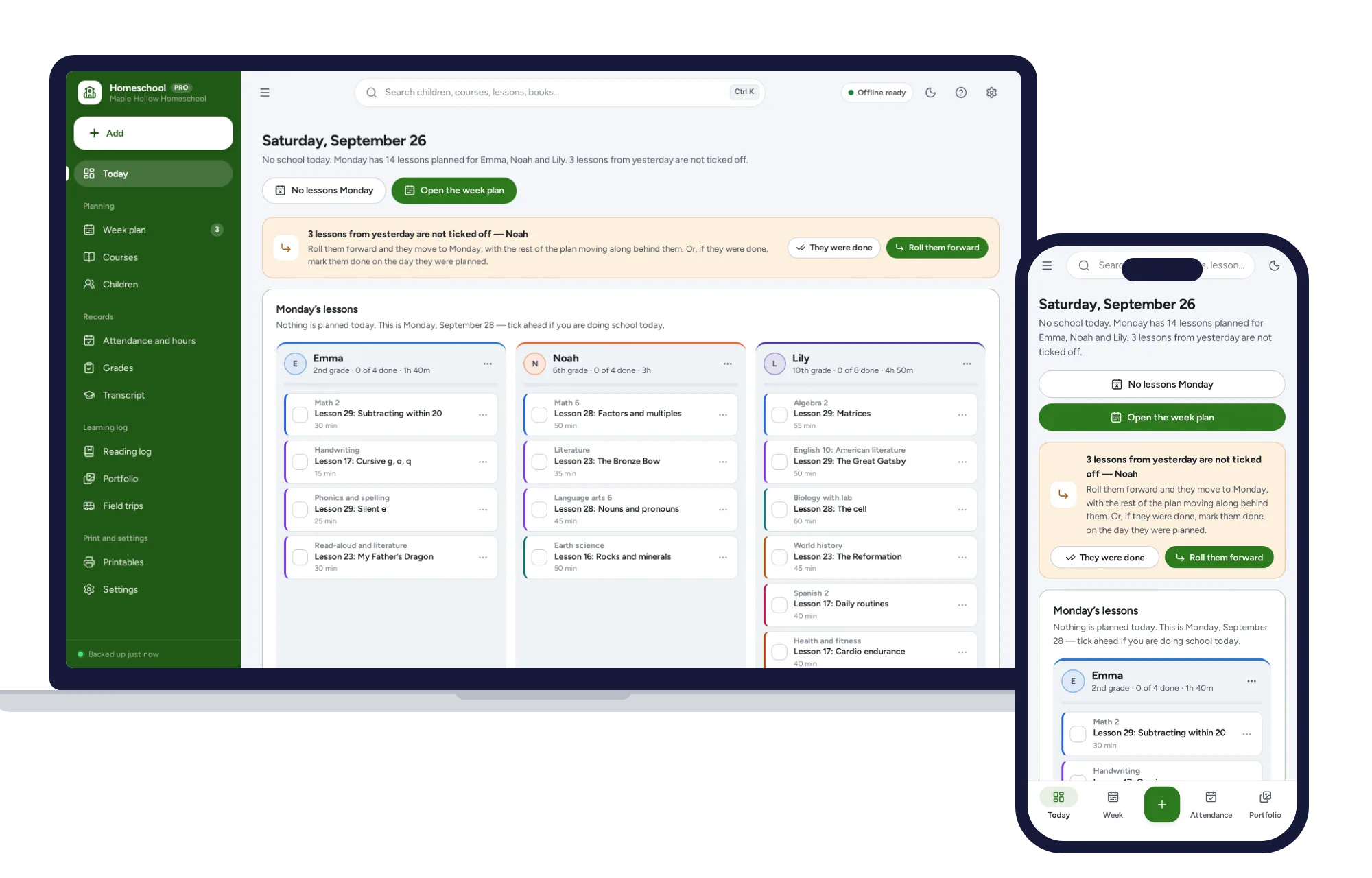
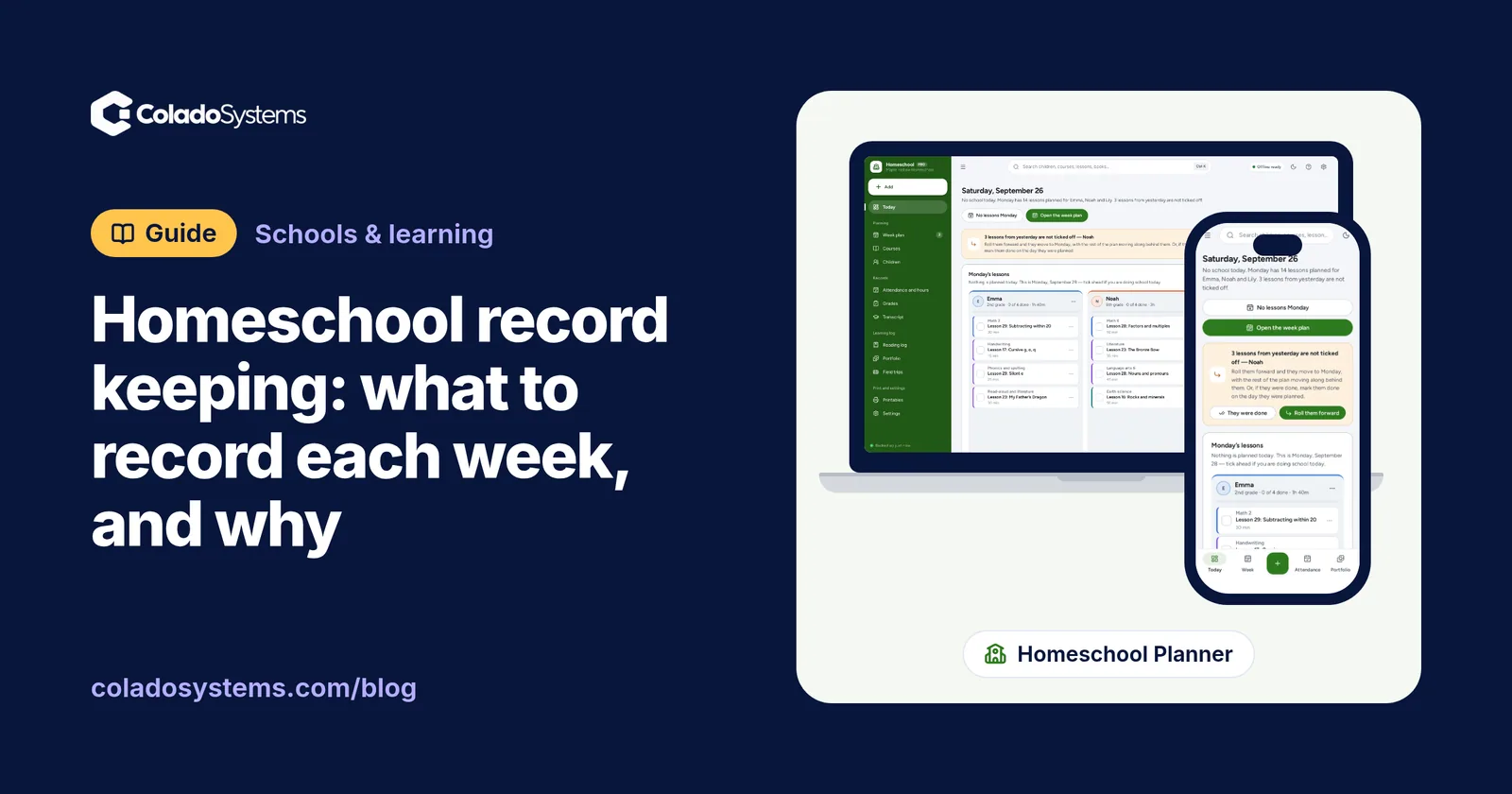
The Homeschool Planner is built around exactly this routine, for several children at once. You enter the days or hours your state asks for, and it counts attendance against that number. A day counts as soon as a lesson is ticked off, and it shows who is behind and by how much. It does not know any state’s rules, so the number you type in is the one it uses.
It also keeps an hours log for lessons, trips and activities, a portfolio with photos of work samples, a reading log for every child, field trips, a gradebook, and a high school transcript with credits and a GPA worked out on a 4.0 scale. Weekly plans roll forward when a day is missed, so a sick day does not mean rewriting the rest of the term. Attendance records, transcripts, weekly plans and reading lists print headed with your homeschool’s name.
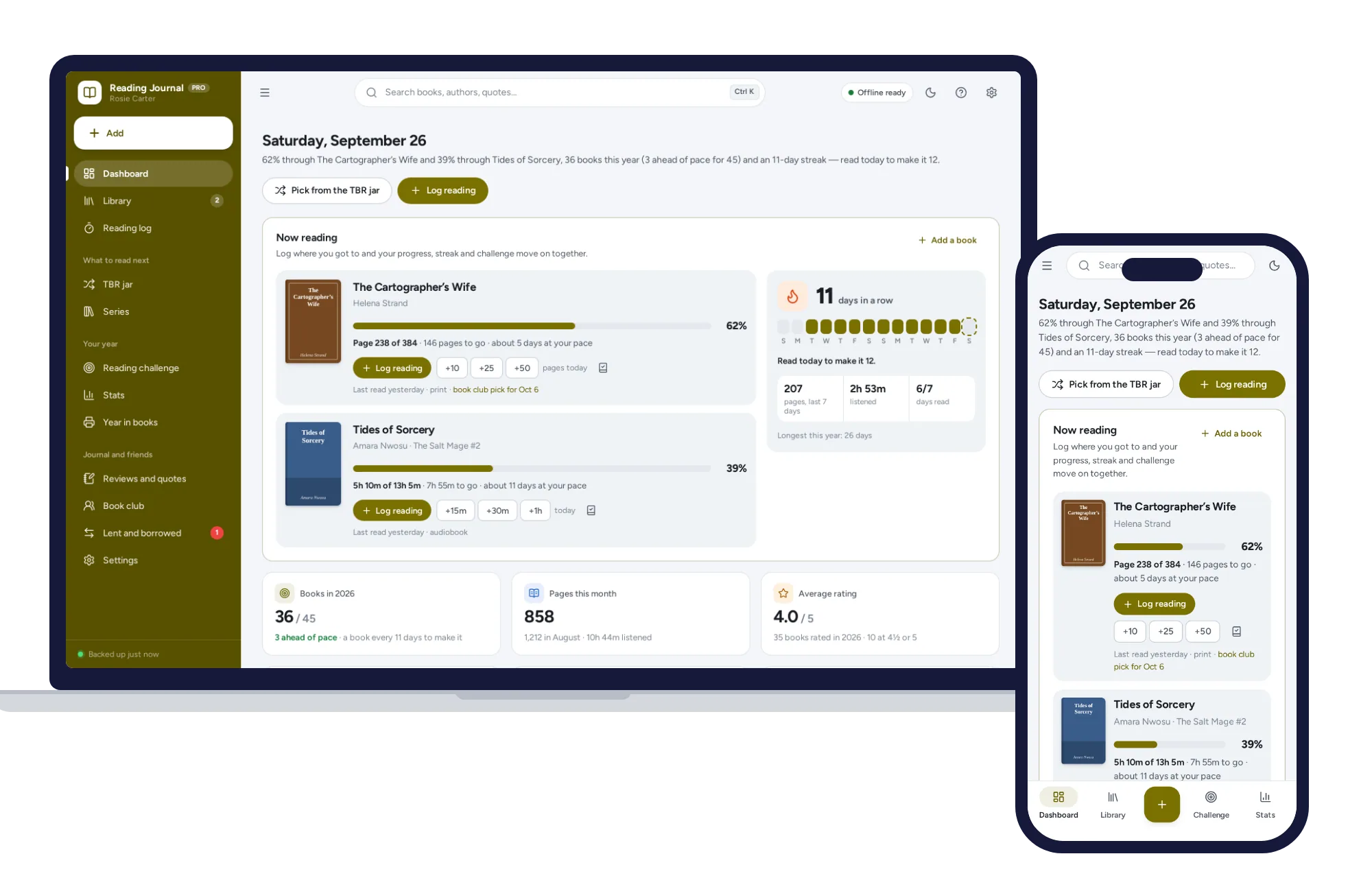
For that keen reader, the Reading Journal & Book Tracker goes deeper on one reader’s books: reading sessions and streaks, half-star ratings and reviews, favorite quotes with the page, a yearly reading challenge and a printable year in books.
Both run offline in the browser, with nothing uploaded and no account. Each device keeps its own copy, so most families keep the planner on one laptop and download a backup regularly. You can also browse other systems for schools and learning.
Skip the setup
The Homeschool Planner has the records this guide describes already set up. Weekly lesson plans for every child that roll forward when a day is missed, an attendance and hours tracker, and a transcript with GPA. No subscription.
$24.99 one-time
- Sample data to try it the same day
- Works offline, records stay on your device
- A PDF guide in the download
See everything inside the Homeschool Planner. Or take the whole Schools & learning shelf: 8 systems for $119.99, $99 less than one by one.
Common questions
What records do I need to keep for homeschooling?
It depends on where you live. Some states and countries require nothing, while others ask for attendance, hours, a portfolio, test results or an annual evaluation. Check your state or national education department first. Even where little is required, a weekly note of attendance, subjects covered, books read and a few work samples gives you a solid record if anything changes.
How do I keep track of homeschool hours?
Log time on the day it happens rather than estimating at the end of the term. Note the subject or activity and roughly how long it took, including field trips, co-op classes, music and sports if your rules count them. Total the hours each week and compare them with the pace you need to reach your requirement by the last day of the school year.
What should go in a homeschool portfolio?
A useful portfolio shows progress across the year. Include a reading list, an attendance record, a short log of what each subject covered, and dated work samples from the start, middle and end of each topic. Add photos of projects that do not fit in a folder. If your state reviews portfolios, ask what the reviewer expects to see.
How long should I keep homeschool records?
There is no single answer, because requirements differ by state and country, so check your local rules first. Many families keep elementary records for a few years and keep high school records, including the transcript, course descriptions and grades, permanently, since colleges and employers may ask for them long after graduation.