To get organized when caring for an aging parent, keep one shared record that every sibling works from: their medicines, appointments, doctors, contacts and where each important document is kept, boiled down to a one-page emergency sheet. Then share the load by listing the recurring jobs, agreeing on shares, keeping a visiting schedule and recording who paid for what.
The record does not need to be perfect. It needs to be the only one, kept up to date, with a copy that can leave the house in a hurry. Without it, an emergency room nurse who asks “What medications is your mom taking?” can get three different answers from three siblings.
This is general guidance from a practical point of view. For anything medical, check with your parent’s doctor or pharmacist. For legal and financial documents, talk to a lawyer who works with older people and their families, because the rules depend on where your parent lives.
Start with one master record
Begin with the basics a stranger would need:
- Full name, date of birth, address and insurance details
- Primary doctor and pharmacy
- Allergies, written first and clearly
- Conditions, in the doctor’s own words rather than your summary of them
- Care needs: mobility, hearing, eyesight, diet, and anything that helps, such as “speaks slowly on the phone” or “prefers to be called Peggy”
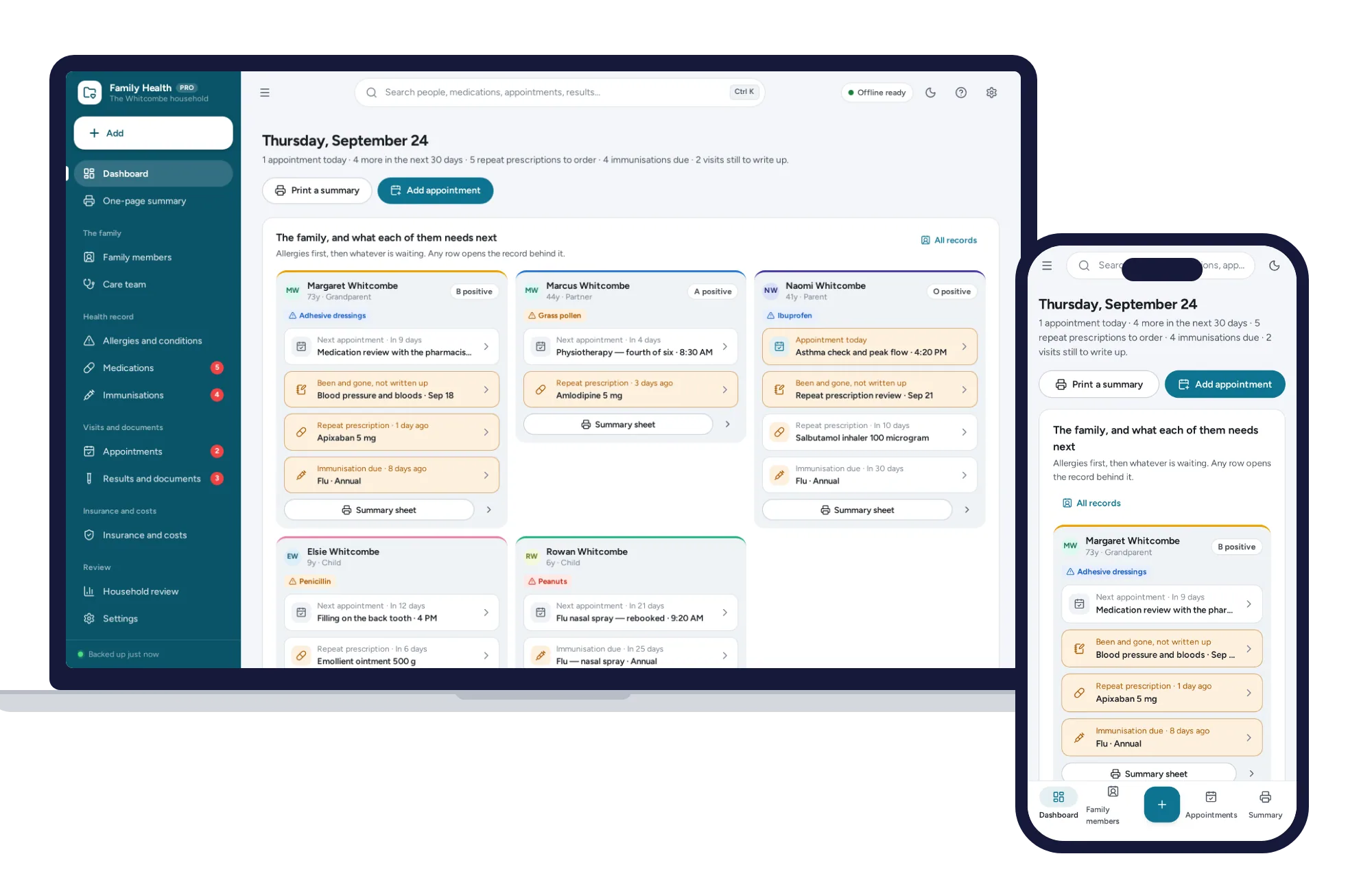
Keep it to facts you actually know. If you are unsure, write “check” next to it and ask at the next appointment. It is the same set of basics many parents keep for their own household in a family medical records organizer, with allergies printed first on a one-page summary.
How to keep track of an elderly parent’s medications
The medication list causes more confusion than anything else. Make one list and make it the only one. For each medicine, record:
- Name and strength, copied from the label
- Dose and time of day: morning, lunchtime, evening, bedtime or as needed
- What it is for, and who prescribed it
- The pharmacy, and the date to reorder
That last item deserves attention. Track the date you need to order, not the date it runs out. Say a pack holds 30 tablets taken once a day, started on October 1. It runs out on October 30. If the pharmacy needs three days and a weekend might get in the way, the date that matters is October 24.
Whenever anything changes, update the list, write the date on it and throw away the old copies. And once or twice a year, ask the doctor or pharmacist to review every medicine together, including vitamins and anything bought over the counter. Never stop or change a medicine without them. MedlinePlus’s guide to taking multiple medicines safely gives the same advice: keep one list of everything, over-the-counter medicines and supplements included, and go through it with the provider at appointments.
Appointments and what was said
Keep every appointment in one calendar, with a name next to it showing who is taking your parent.
The part families skip is the write-up afterward. Within a day, note what the doctor said, anything that changed, what happens next, and questions that came up on the drive home. Those questions become the start of the list for the next visit. Bring the current medication list to every appointment.
Doctors and contacts
Build a care team list with phone numbers and what each person handles:
- Primary doctor, specialists, dentist and pharmacy
- Any home care agency or paid caregiver
- Neighbors or friends with a key
- Every sibling, with their best number and when they can be reached
Documents and where the originals are
You do not need copies of every document in one folder. You need to know where each original is and who holds it. The usual list includes:
- Power of attorney for finances and for health care
- The will, and any advance directive or living will
- Insurance policies and cards
- Bank, pension and property paperwork
Which documents your parent should have, and what makes them valid, depends on where they live. A lawyer can tell you what is missing. If advance directives are new to you, MedlinePlus has a plain overview of them, including living wills and a power of attorney for health care. Your job is the map: “Health care power of attorney: original with Cara, copy in the blue folder in Mom’s desk.” For the rest of the family’s paperwork, here is what to put in a household emergency binder, section by section.
The emergency sheet
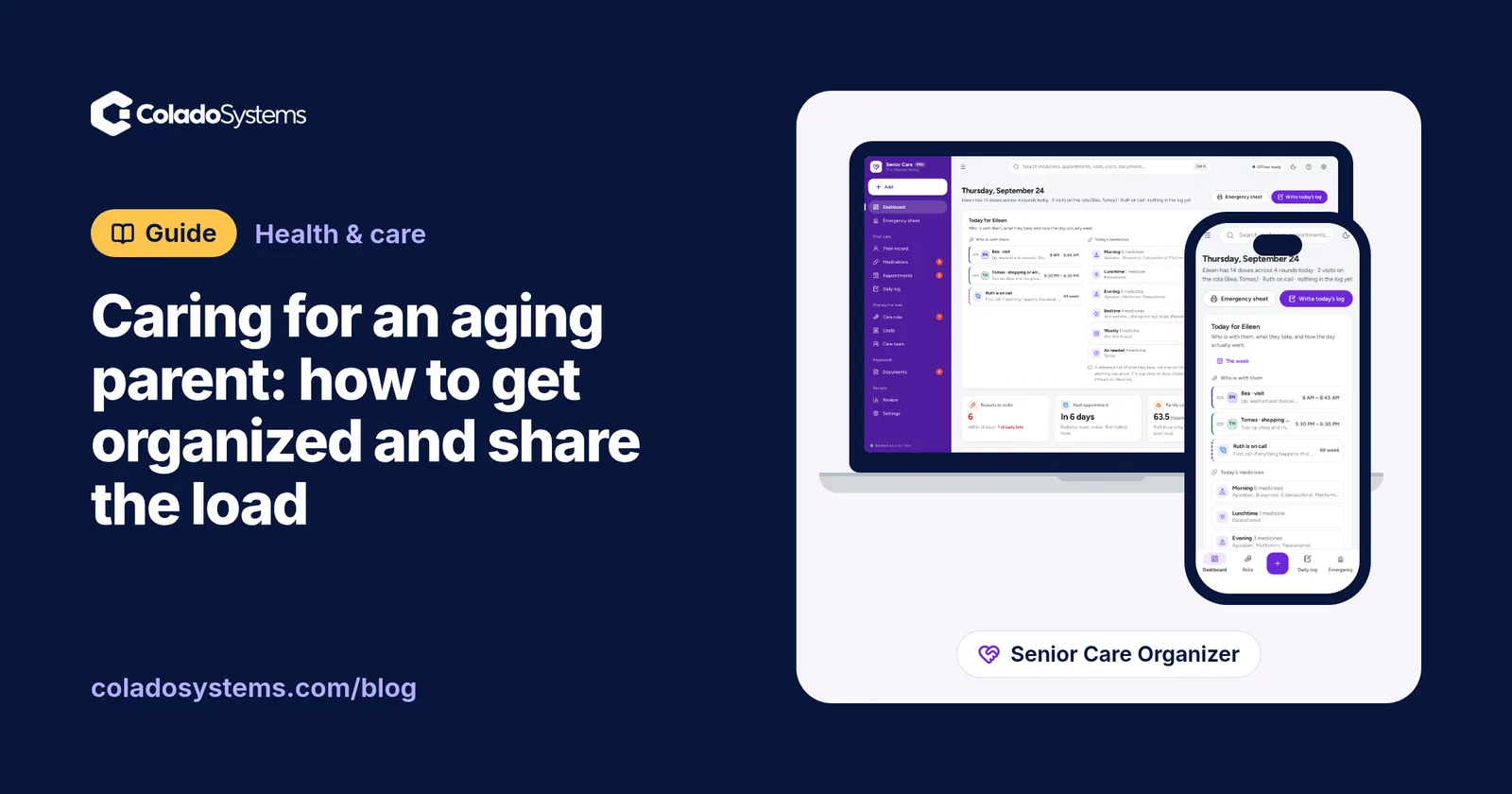
Boil all of this down to one page: allergies at the top, then conditions, every medicine, the primary doctor, who to call, and where the power of attorney is kept. Put a copy on the fridge, one in your parent’s bag, and a photo on each sibling’s phone. A senior care organizer with a printable emergency sheet sets out allergies, conditions, every medicine, who to call and where the paperwork is kept, in bold type and boxes, so any printer will do.
Be clear that it is a family summary, not an official record. In a real emergency, call the emergency services and tell them what you know.
How do siblings share caring for an aging parent?
In many families, one sibling ends up doing most of the work, usually the one who lives closest. Nobody decided it. It just happened, and resentment builds quietly on both sides.
The fix is to make the work visible:
- List the recurring jobs. Visits, overnight stays, appointment runs, setting up pill boxes, groceries, paying bills, being on call.
- Agree on shares. They do not have to be equal. A sibling who lives far away might take the phone calls and paperwork, or cover more of the costs.
- Keep a care schedule. Who is visiting which day, and who is on call. Look a week ahead for days with nobody down to visit.
- Talk once a month. Fifteen minutes to check whether the plan still fits.
Money needs the same openness. Record every cost and who actually paid it, then settle up regularly. Say in one month Ana paid $420 for a home aide, Ben paid $90 for groceries and Cara paid $150 to rent a shower chair and walker. The total is $660, or $220 each if you split evenly. Ana is owed $200. Ben pays her $130, Cara pays her $70, and everyone is square.
When costs come out of your parent’s own account, record them so the total is honest, but leave them out of the settle-up. That is their money, not a debt between brothers and sisters.
Keeping it all in one place
The Senior Care Organizer is built for the adult child coordinating care alongside brothers and sisters. It prints the emergency sheet described above, including where the will is kept. Medicines are laid out by time of day with the date you need to order, not the date they run out. Appointments keep what was said. Its care rota, the visiting schedule, shows what each person did against the share they agreed to and flags any day with nobody down to visit. Costs record who paid, split evenly or by agreed share, and show the fewest payments that settle the balance, with your parent’s own money kept out of it. There is also a daily log for mood, eating, sleep and falls, a care team list, and a documents page showing who holds each one and where the original is kept.
Each device keeps its own copy, so most families run it on the laptop of whoever does the admin and print the visiting schedule, the medicines list and the emergency sheet for everyone else. It does no interaction or dose checking; if something looks wrong, call the pharmacy.
If you are also keeping your own household’s medical paperwork, the Family Medical Records Organizer holds allergies, medications, immunizations, appointments, results and insurance costs for everyone at home.
Both run offline in the browser, with nothing uploaded and no account. Keep the device locked, and treat backups and printouts with the same care as the documents themselves. You can also browse more systems for health and care.
Skip the setup
The Senior Care Organizer has the records this guide describes already set up. Her medicines, her appointments, who is visiting when and who has paid for what — one folder for the family looking after Mum, offline, on your own device.
$24.99 one-time
- Sample data to try it the same day
- Works offline, records stay on your device
- A PDF guide in the download
See everything inside the Senior Care Organizer. Or take the whole Health & care shelf: 10 systems for $139.99, $87 less than one by one.
Common questions
How do siblings split the cost of caring for a parent?
Start by agreeing on shares, which do not have to be equal, then record every expense along with who paid it. Once a month, total the costs, work out what each person should have paid under the agreed split, and settle the differences with as few payments as possible. Keep anything paid from your parent's own money out of the split.
What documents should I have for my aging parent?
Most families want to know where to find a power of attorney for finances and for health care, the will, any advance directive, insurance policies, and bank and pension paperwork. Which documents your parent needs and what makes them valid depends on where they live, so ask a lawyer who works with older people to check what is in place.
How do I keep track of my elderly parent's medications?
Keep one master list, copied from the labels, with each medicine's name, strength, dose, time of day, purpose, prescriber and reorder date. Date the list every time it changes and destroy older versions so nobody works from the wrong one. Ask the doctor or pharmacist to review the full list, including supplements, and never change a medicine without them.
What should be on an emergency sheet for an elderly parent?
Put allergies at the top, then conditions, every current medicine with its dose, the primary doctor and pharmacy, who to call in order, and where legal papers such as the power of attorney are kept. Keep it to one page, date it, and make clear it is a family summary. Leave copies where they will be found quickly.