Open the fridge on a Thursday and you can usually see where the grocery money went. Half a bag of spinach going dark. A tub of sour cream bought for one recipe. A second pack of chicken, because nobody remembered the first one was in the freezer.
Meal planning on a budget is mostly about stopping those leaks. You do not need coupons or a new diet. You need a weekly number, a look at what you already have, a plan that uses things up, and a shopping list written from that plan. This routine takes about 30 minutes a week and works with a pen and the back of an envelope.
Start with a weekly grocery number
Before you plan meals, decide what the week can spend. Pull up your last two months of bank and card statements and add up every grocery charge, including the quick top-up trips. Divide by the number of weeks.
Say eight weeks came to $1,180. That is about $148 a week, and it is your real starting point, not the number you guessed. Set a target a little below it, perhaps $130, rather than a dramatic cut you will abandon by the second week.
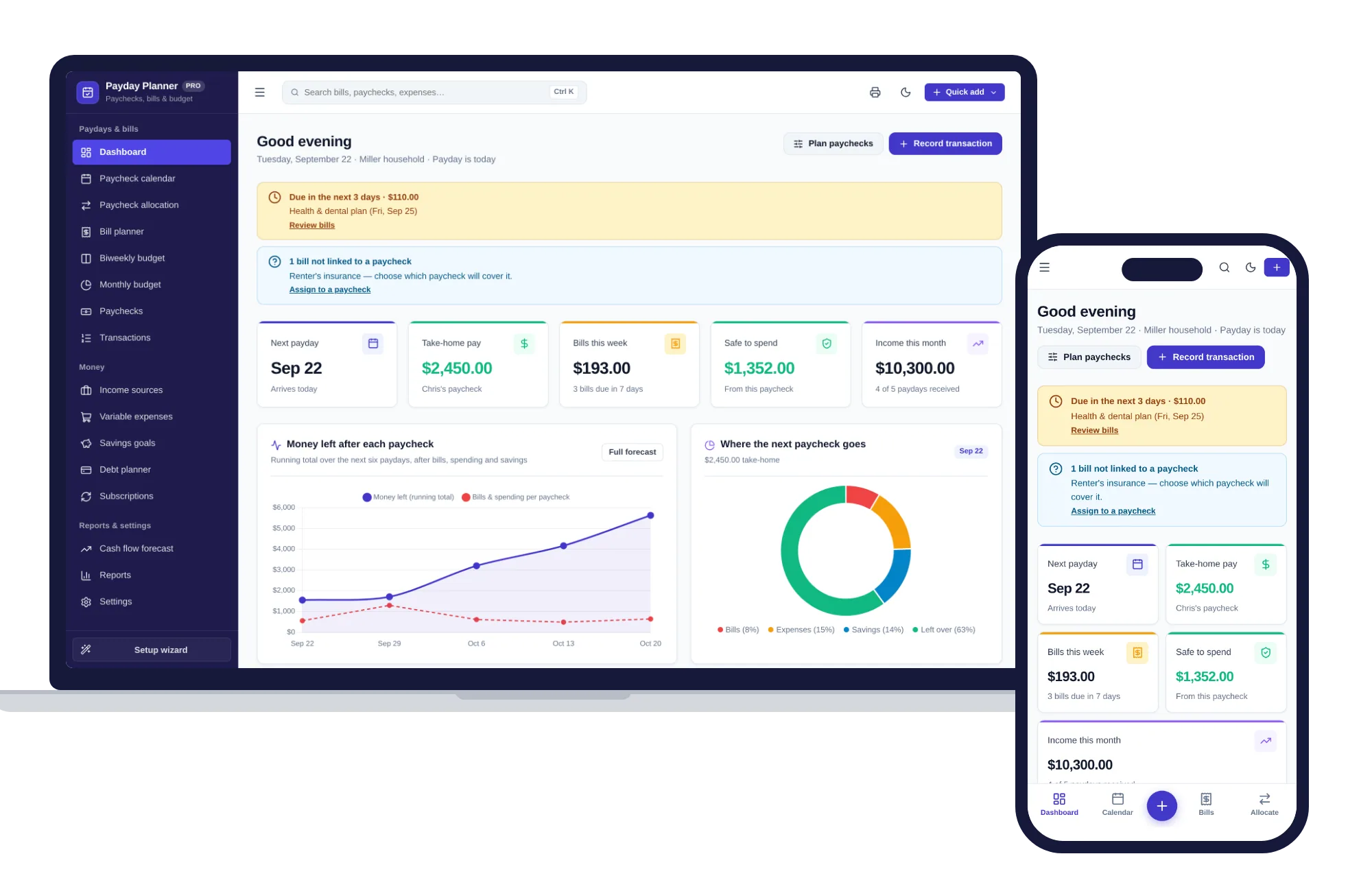
Then tie the number to your paychecks. If you are paid every two weeks, set aside two weeks of grocery money on payday, after the bills due before the next check. A payday and bill planner that shows what is left from each paycheck after bills and savings makes that number one you can actually afford, rather than one that collides with the electric bill.
Shop your kitchen first
Every plan starts in the fridge, freezer and cupboards, not in a recipe book. Spend five minutes listing:
- Anything that needs using in the next three days
- Meat, bread or meals already in the freezer
- Half-used jars, bags and packets
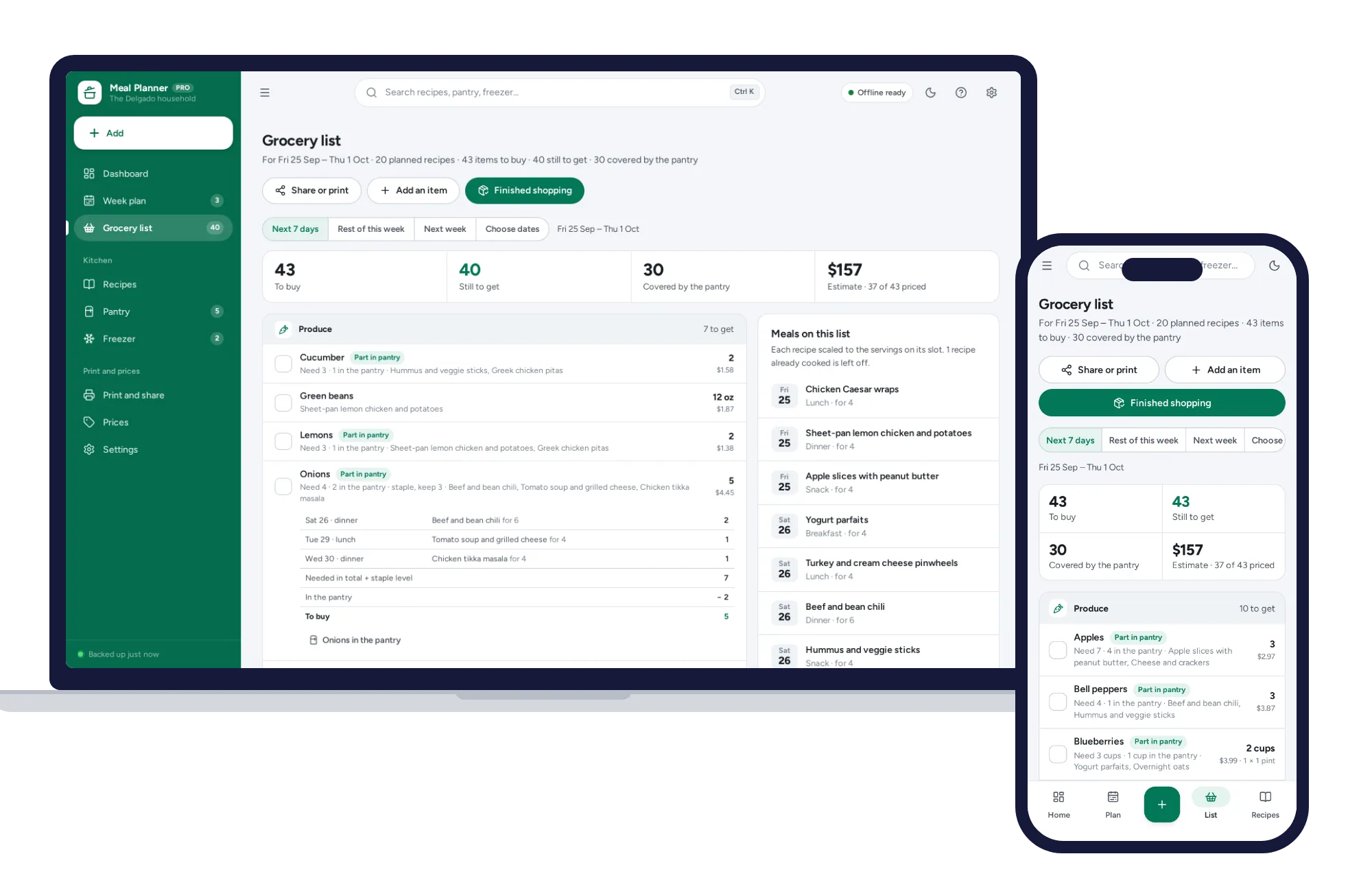
The first group sets Monday and Tuesday’s dinners. The second gives you at least one free dinner later in the week. A meal planning system with pantry use-by dates suggests recipes for anything close to its date, but a sticky note on the fridge labeled “use it up” does the same job.
A weekly routine for meal planning on a budget
Plan dinners only. Breakfasts and lunches can run on a short rotation that rarely changes.
Use a simple shape. Four or five planned dinners, one leftovers night and one freezer or pantry night. Leftovers and freezer meals cost nothing new.
Overlap ingredients. If you buy a bunch of cilantro for Monday’s tacos, put rice bowls with cilantro on Wednesday. Roast a whole chicken on Sunday, use the rest in wraps on Monday, and make soup from the bones. Every ingredient that appears twice is one less thing to throw away.
Cook once, eat twice. Double the chili or the pasta sauce and freeze half, labeled with the name and date.
Check the calendar. The night with a late meeting needs a 15-minute meal or something from the freezer. Plan a complicated recipe there and you will end up buying takeout. For the rest of the weekly family plan, see a simple Sunday reset routine for busy families.
Lean on cheap bases. Beans, lentils, rice, pasta, oats, eggs, potatoes, frozen vegetables and seasonal produce stretch further than most ready-made foods. Prices vary by store, so notice what is cheap where you shop.
Work out the cost per serving
You do not need to price every meal forever. Do it once for the ten dinners you make most often, and you will know which ones carry the budget.
The math is simple: add up the cost of what the recipe uses, then divide by the servings. Count only what you use, so half a $3 bag of rice counts as $1.50.
A worked example with made-up prices. A pot of chili uses $5 of ground beef, $2 of beans, $2 of canned tomatoes, $1.50 of onions and peppers and $1.50 of spices and oil. That is $12 for 8 servings, or $1.50 a serving. For a family of four, that pot covers two dinners, one of them from the freezer. The same two nights of takeout at $12 a person would cost $96.
How do you make a grocery list that saves money?
Write the list from the plan, never from memory. Go through each recipe, add up the same ingredient across meals (two onions here, one there, so buy three), then cross off anything the pantry already holds. Add staples you are actually low on.
Then:
- Sort it by aisle, in the order you walk the store
- Compare unit prices on the shelf label, not the package price
- Shop once a week, with the list, and limit top-up trips
- Allow one unplanned item, so the list feels livable
Cut food waste in the middle of the week
Plans drift. A five-minute check on Wednesday catches what is about to spoil, and you can swap Thursday and Friday around to use it.
Freeze before things turn: bread, ripe bananas, cooked rice, leftover meat. Label everything with a date.
For one month, keep a note of what you throw away and why. If it is always the second half of a bag of salad, buy a smaller bag or plan salad twice. That note will tell you more about your grocery bill than any app.
Paper, apps or a ready-made system?
A paper plan on the fridge is free and quick, but it will not add up quantities or remember what is in the pantry. A spreadsheet can hold costs per serving, though building one that merges ingredients and subtracts the pantry takes real formula work.
Subscription meal planning apps offer recipe libraries and lists that sync to a partner’s phone, which is a genuine advantage if two people shop. At, say, $6 a month, that is $72 a year, every year, which is a chunk of the savings you are planning for.
A ready-made offline system costs a one-time price, opens without signal in the store and keeps your records on your own device. The trade-offs: no live sync between phones, and you make your own backups.
Keeping it all in one place
To build this routine yourself, you need a recipe sheet with quantities per serving, formulas that scale and merge ingredients, a pantry tab that subtracts from the list, a cost-per-serving column, and a budget tied to your paychecks. That is a weekend of spreadsheet work before your first plan.
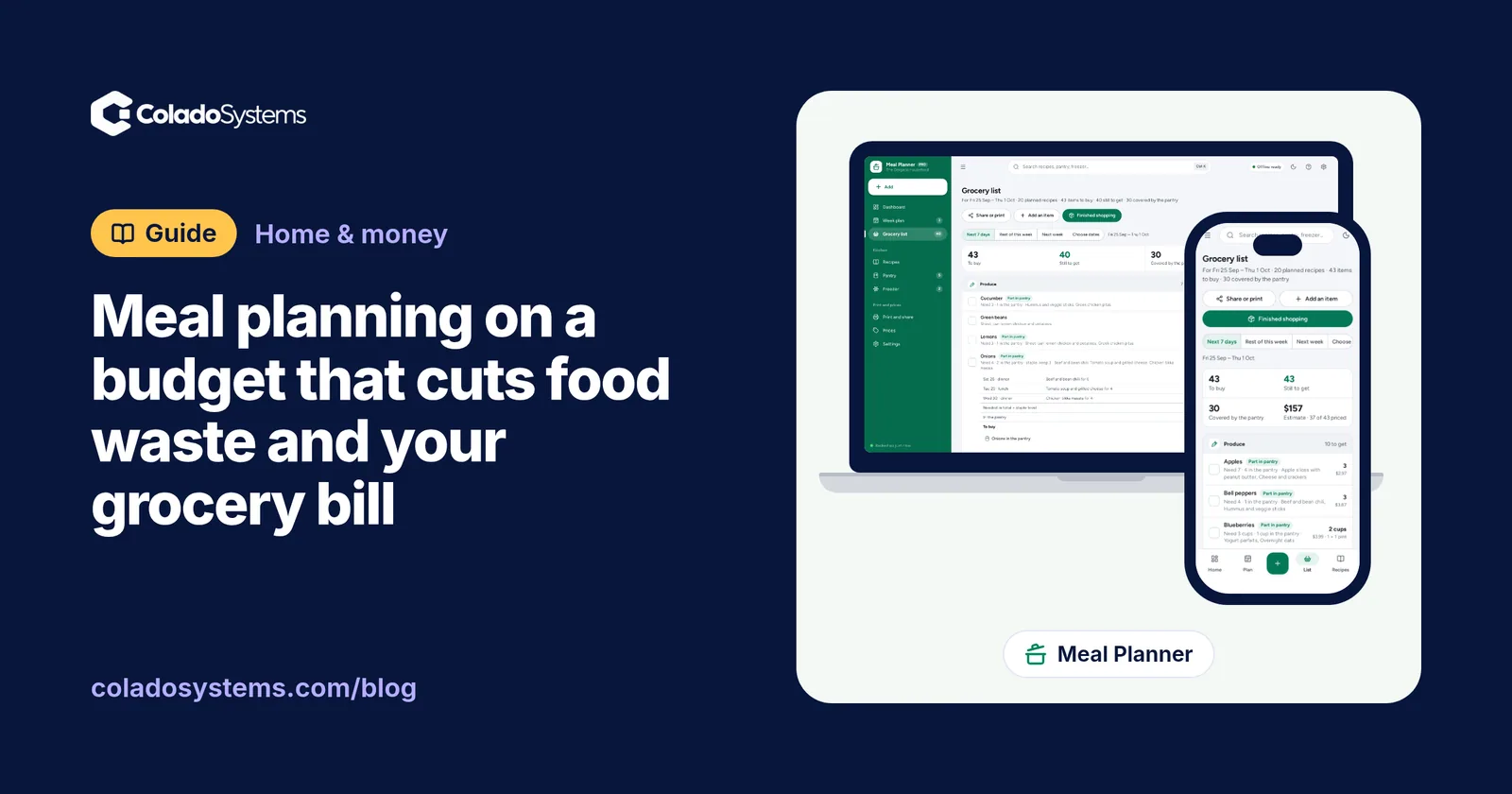
The Meal Planning System already does it. You drag recipes into the week, and the grocery list is built from the plan: every recipe scaled and merged, what the pantry holds taken off, staples topped up and the rest sorted by aisle. Leftovers and freezer meals add nothing to the list, unplanned dinners stand out before the week starts, and the pantry tracks use-by dates. Type in what you pay and it shows a cost per serving; nothing is looked up online. Print the week for the fridge, or send the list as text to whoever does the shop.
The Payday & Bill Planner assigns each bill to a paycheck and shows what is left, has a variable expenses page for groceries, fuel and dining, compares monthly limits with real spending, and lists every recurring charge, so a forgotten meal-kit subscription is easy to spot. If the money you free up goes toward debt, here is how to choose between debt snowball and avalanche.
Both open with sample data, so you can try a full week before adding your own. There is no account or sign-up, they work offline, records stay on your device, and each comes with a PDF guide. Both sit on the home and money shelf, which also comes as one of the bundles for less than buying them one by one. You can browse more systems for home and money too.
Plan one week with the steps above and compare the receipt with your weekly number. You can see everything inside the Meal Planning System and try it with the sample kitchen the same day.
Skip the setup
The Meal Planner has the records this guide describes already set up. Plan the week and the grocery list writes itself — merged, sorted by aisle, with what the pantry already holds taken off.
$24.99 one-time
- Sample data to try it the same day
- Works offline, records stay on your device
- A PDF guide in the download
See everything inside the Meal Planner. Or take the whole Home & money shelf: 7 systems for $89.99, $84 less than one by one.
Common questions
How much should I budget for groceries per week?
There is no single right figure, because household size, where you live and what you eat all change it. Start from your own numbers: add up the last two months of grocery spending, including small top-up trips, and divide by the number of weeks. Set your target a little below that, then adjust after a month of real shopping.
What are cheap meals to put on a budget meal plan?
Meals built on low-cost bases tend to stretch furthest: eggs, oats, potatoes, rice, pasta, dried beans and lentils, frozen vegetables and whatever produce is in season. Chili, soups, stir-fries, curries, frittatas and sheet-pan dinners all scale up well and freeze or reheat easily. Prices vary a lot by store and region, so check what is cheap where you shop.
How do I stop wasting food when I meal plan?
Look in the fridge before you plan, and build the first two dinners around what needs using. Plan a leftovers night, buy only the amounts the recipes need, and do a five-minute check midweek to swap meals if something is about to spoil. Freeze bread, cooked rice and ripe fruit before they turn, and note what you throw away.
Is it cheaper to shop for groceries once a week?
Often, yes, because every extra trip is another chance to pick up things that were not on the list. One planned shop with a full list keeps spending closer to your number. Fresh produce may still need a short stop midweek; if so, take a list of only those items and pay attention to what else finds its way into the basket.