Quick question: which of your tenants hasn’t paid this month? If answering means scrolling through your banking app and trying to remember who sent what, you need a better way to track rent payments, and you’re not alone. Most small landlords start with a notes app, a folder of leases and a good memory. That works until the day a lease runs out without anyone noticing, or a tenant says they reported the leak in March.
You don’t need a monthly subscription to run a handful of rentals well. You need five records, kept current, and a short check on the same day every month.
The five records every landlord needs
- Properties and units. Address, unit number, beds and baths, current rent, and whether it’s let, vacant or under repair.
- Tenants and leases. Names, phone, email, lease start and end dates, rent, deposit held, and any renewal terms.
- A rent roll. One line per unit per month: rent due, amount paid, date paid, balance.
- A repair log. Every request from report to finish, with the cost.
- An expense log. Repairs, insurance, property tax, utilities and mortgage payments, by property and category.
Everything else (cash flow, tax prep, renewal decisions) comes from these five.
How to track rent payments with a monthly rent roll
The rent roll is the heart of it. On a set day each month, a few days after rent is due, go through every unit and mark it paid, partial or overdue.
Here’s a made-up example for three units in October:
| Unit | Rent due | Paid | Date | Balance |
|---|---|---|---|---|
| A | $1,200 | $1,200 | Oct 1 | $0 |
| B | $950 | $500 | Oct 3 | $450 |
| C | $1,100 | $0 | $1,100 |
At a glance, you know Unit B owes $450 and Unit C hasn’t paid at all. You know who to contact today, instead of noticing next month that the total looks short.
Record every partial payment against the balance, and give the tenant a receipt for each payment. It saves arguments later about what was paid and when. A spreadsheet can do this, or a landlord rent roll app that shows paid, partial and overdue for any month and records each payment with a receipt.
What to do when rent is late
Consistency protects you. Decide your steps once, write them down, and apply them to every tenant:
- A friendly reminder the day after any grace period in the lease ends. Often it’s a simple oversight.
- A late fee, only if your lease includes one and your local rules allow it. Record it on the tenant’s balance, or record that you waived it.
- A written notice if the rent is still unpaid after a set number of days.
- A note of every contact: the date, how you got in touch, and what was said.
Rules on grace periods, late fees, notices and evictions vary a lot by state and city. Before you set your process, check them with a local landlord-tenant lawyer or your local landlord association.
A repair log that protects you
When a tenant reports a problem, log it straight away with:
- The date reported and who reported it
- The unit and the problem
- A priority: emergency (no heat, active leak), urgent, or routine
- Who is fixing it, and the quote
- The date it was fixed and the final cost
- Photos before and after
This log does three jobs. It keeps repairs from being forgotten. It shows you responded, if there’s ever a dispute. And it adds up your repair costs per property, which you’ll want at tax time.
Add scheduled upkeep to the same list: furnace filters, smoke alarm checks, gutter cleaning, a yearly walk-through of each unit. A routine job is usually cheaper than the emergency it prevents.
Put leases and renewals on a countdown
A lease end date that sneaks up on you leaves you rushing to find a tenant or settling for a quick, vague renewal. Keep a list of every lease with its days left, and act at three checkpoints:
- 90 days out: decide whether to offer a renewal. Compare the current rent with what similar units nearby are asking.
- 60 days out: send the renewal offer, with the new rent and terms, in writing.
- 30 days out: have the renewal signed, or start planning the move-out and the next tenant.
The notice you must give, and any limits on rent increases, depend on your lease and local law, so check them before you send anything.
For deposits, record the amount, the date received and where it’s held. Do a move-in checklist with photos for every unit, and repeat it at move-out. Any deductions should be listed and backed by those records. Deposit rules also vary by location, so check yours.
See what each property really earns
Once the records are in place, the yearly picture is simple arithmetic. Say one unit rents for $1,100 a month:
- Rent for a full year: $13,200
- One month vacant between tenants: you collect $12,100
- Insurance, property tax, repairs and utilities: $4,500
- Mortgage payments: $6,000
- Cash left for the year: $1,600, or about $133 a month
One vacant month and one big repair could cut that in half. That’s why the rent roll, the repair log and the lease countdown matter: each one protects that thin margin.
Once you own several buildings, it helps to see loan balances and equity next to the cash flow. A property management system that shows value, debt and equity per property puts cash flow and return side by side for each one.
Your monthly 15-minute check
- Mark every unit paid, partial or overdue
- Send reminders and record any late fees or waivers
- Review open repairs and chase anything stalled
- Check which leases end in the next 90 days
- Log the month’s expenses by property and category
Keeping it all in one place
A spreadsheet can do all of this, but it’s easy to break and easy to forget. If you’re weighing up the options, here’s when software you buy once beats a monthly subscription. Two systems in our shop handle it. Each is bought once, with no subscription, and your records stay on your own device.
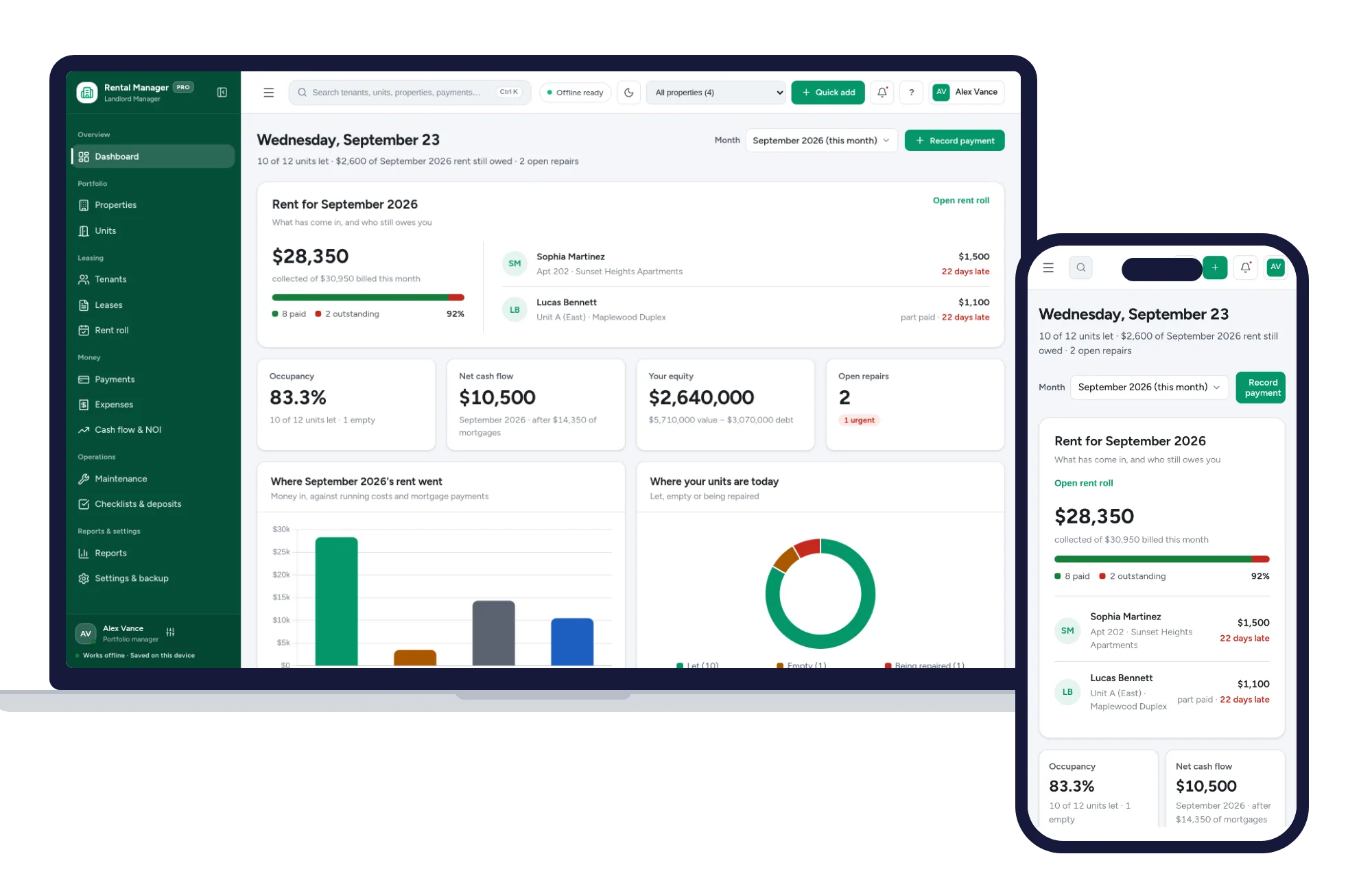
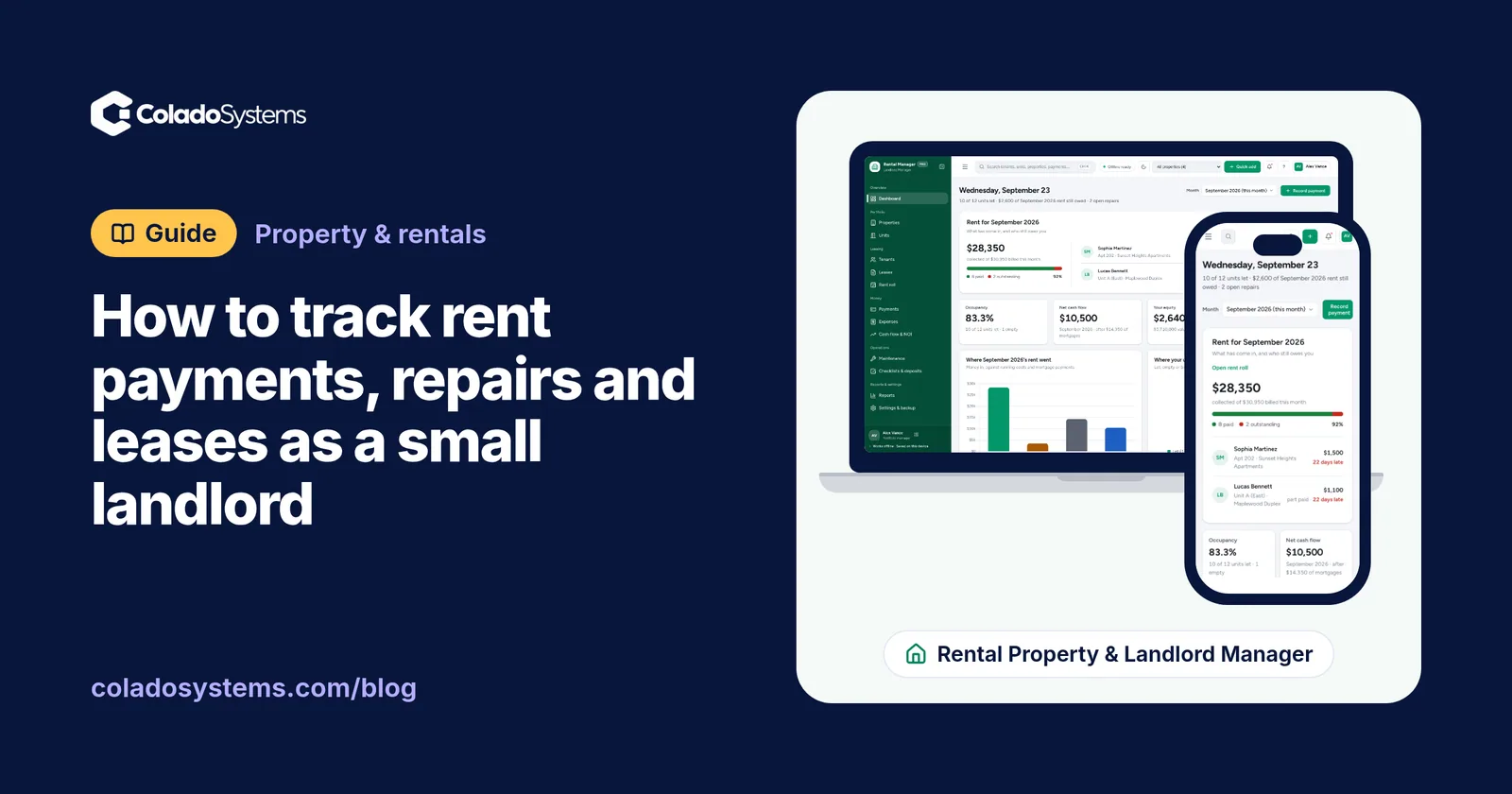
The Rental Property & Landlord Manager is built around the rent roll. It shows paid, partial and overdue for any month, lets you add or waive late fees, and prints a receipt for each payment. Leases show their days left, with those ending soon flagged. Maintenance runs from request to done with priority, unit and vendor, and repair costs are logged per property. It also covers move-in and move-out checklists, deposits, cash flow and net operating income, and expenses you can export as a CSV for your accountant.
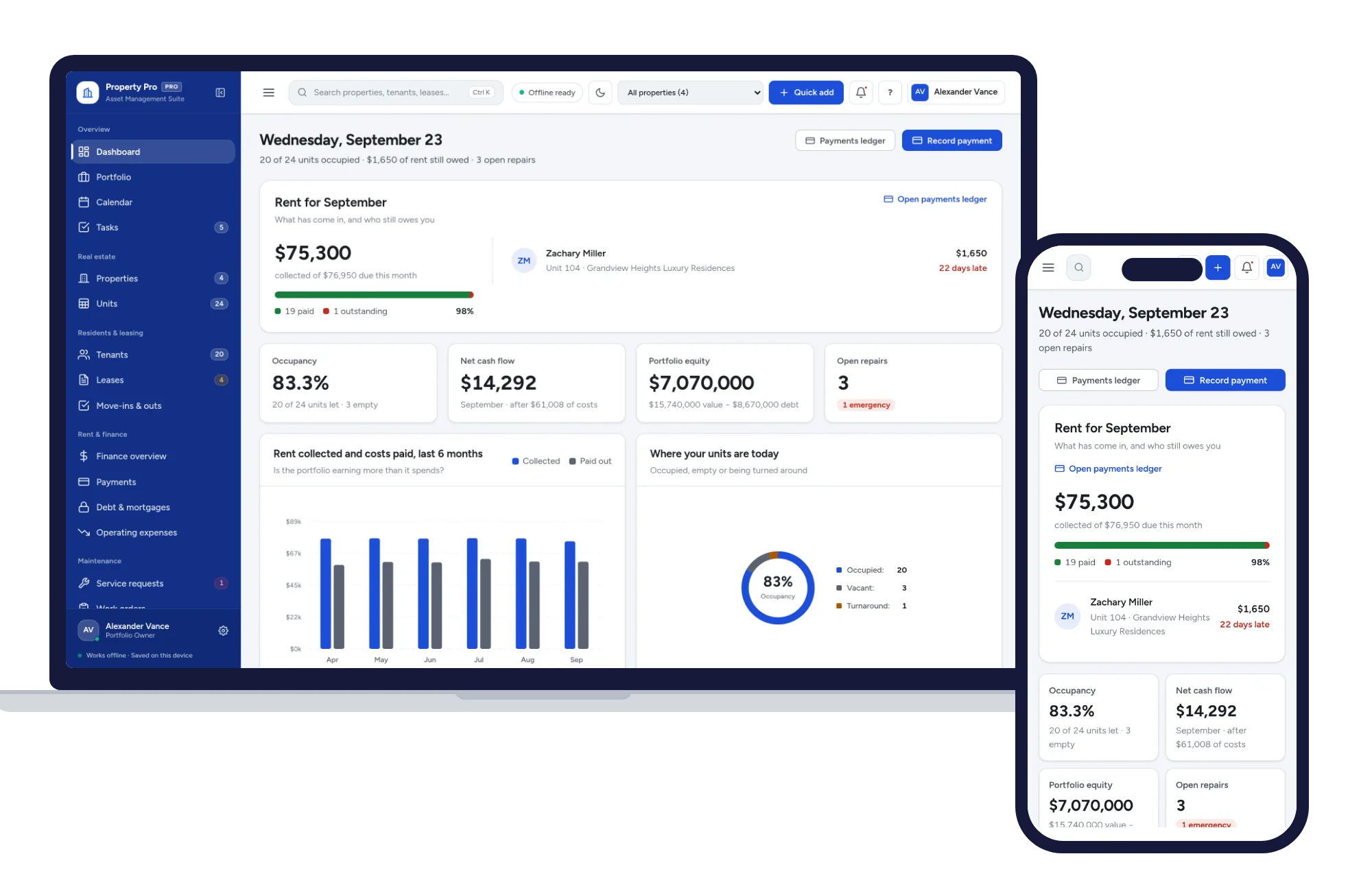
The Property Management System suits a growing portfolio. Along with tenants, leases with renewals flagged early, rent and repairs, it adds value, debt and equity per property, loans and mortgages, market rent next to current rent, and a calendar for inspections and deadlines. It handles residential and commercial property types, and prints rent receipts.
Back up either one regularly, since the records live only in your browser. You’ll find other systems for property and rentals on the same shelf, and if you also host short stays, this turnover checklist and routine for short-term rental hosts covers the time between guests.
Then set a reminder for your monthly check and keep it.
Skip the setup
The Rental Property & Landlord Manager has the records this guide describes already set up. Rent roll, tenants, leases, expenses and cash flow for landlords, in one offline app.
$29.99 one-time
- Sample data to try it the same day
- Works offline, records stay on your device
- A PDF guide in the download
See everything inside the Rental Property & Landlord Manager. Or take the whole Property & rentals shelf: 6 systems for $99.99, $79 less than one by one.
Common questions
What is the best way for a landlord to track rent payments?
Keep a rent roll: one line per unit for each month, showing rent due, amount paid, date paid and the balance left. Update it on a fixed day every month, record partial payments against the balance, and give a receipt for each payment. A spreadsheet or a landlord app both work. What matters most is that it gets updated every single month.
How much can a landlord charge for late rent?
That depends on where the property is. Some places cap late fees or require a grace period, and a fee generally needs to be written into the lease before you can charge it. Check your state and local rules with a landlord-tenant lawyer or a local landlord association, set the fee and grace period in the lease, and apply it the same way to every tenant.
When should a landlord send a lease renewal?
Start deciding around 90 days before the lease ends, and send a written offer with any new rent and terms about 60 days out. That gives the tenant time to decide and gives you time to find someone new if they leave. Your lease and local law may set a minimum notice period, so check both before you send anything.
What records should a landlord keep for taxes?
Keep a record of rent received, every expense by property and category, such as repairs, insurance, property tax, utilities and mortgage costs, along with the receipts and invoices behind them. Keep records of deposits held and returned, too. An accountant can tell you which costs are deductible where you live and how long you need to keep the paperwork.